
Do You Need a Permit to Replace Your AC in Broward County?
Do You Need a Permit to Replace Your AC in Broward County?
Short answer: yes. Replacing an AC system in Broward County generally requires a permit, and it is one of the most important things to ask about before you hire anyone. Some contractors skip it to save time or lower the quote, and that can end up costing you far more later. Here is what you should know.
Why a Permit Is Required
A permit means your local building department knows about the work and can confirm it was done to code. An AC replacement involves electrical connections, refrigerant lines, and equipment that has to be properly secured, which matters a lot in a hurricane zone. The permit and inspection process is there to protect you and your home, not just to add paperwork.
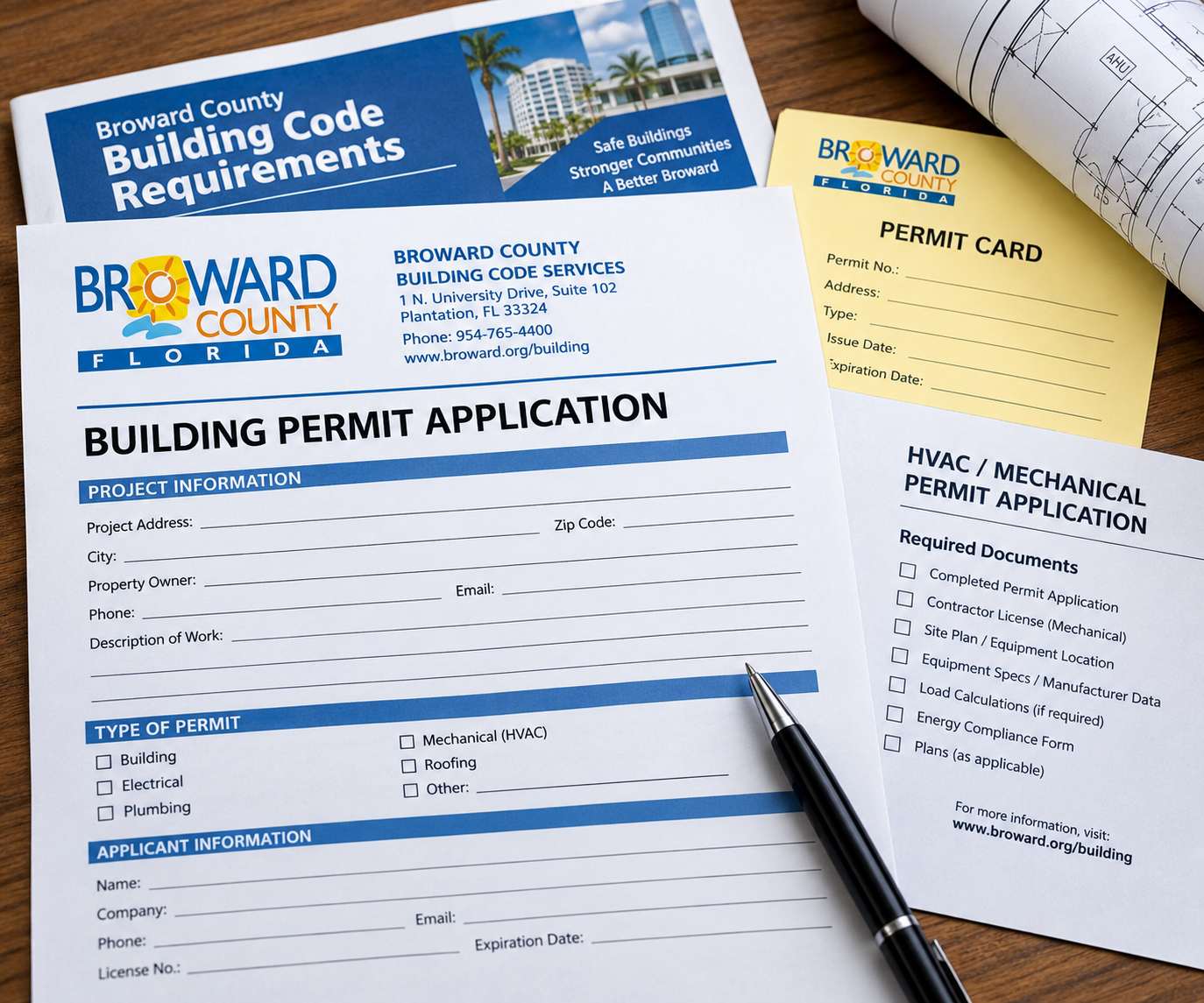
There Is a Countywide Form
Broward County requires a uniform data form for residential and light commercial AC replacements, and it has been mandatory countywide since October 1, 2019. It has to accompany every permit application, which keeps the information consistent no matter which city you live in. Your local jurisdiction still handles the permit itself and can ask for additional information, and each city has its own checklist, so the exact paperwork can vary a little from one city to the next.
What the Process Typically Involves
While the details depend on your city, an AC change out permit application commonly includes a completed permit application, a signed contract showing the cost of labor and materials, the countywide AC replacement data form for each system, an AHRI certificate showing the equipment is a matched system, and equipment tie down details for the outdoor unit. Some jurisdictions also require a Notice of Commencement, depending on the job. A licensed contractor handles all of this for you, including the inspection scheduling.
Why Skipping the Permit Is a Bad Idea
Unpermitted work can create real problems. It can cause trouble when you sell your home, since buyers and their inspectors often look for permit history. It can complicate insurance claims if something goes wrong. It can also mean the work was never inspected, so any mistakes in the installation go unnoticed. And if the city finds out later, you may be the one dealing with the consequences, not the contractor who skipped the step.
A Red Flag to Watch For
If a contractor tells you a permit is not needed, offers a lower price by skipping it, or asks you to pull the permit yourself without explanation, that is worth pausing on. A licensed and insured contractor pulls the permit as a normal part of the job. You can also verify a contractor's license through the state before you sign anything.
Does a Condo or HOA Community Add Anything
It can. If you live in a condo or an HOA community, your association may have its own approval process or requirements for replacing equipment, separate from the city permit. It is worth checking with your association before your installation date so nothing delays the job.
What You Should Expect From Your Contractor
A professional installation should include a clear written quote, the permit handled for you, a proper installation, a final inspection, and a walkthrough when the job is done. If you want to see what that looks like step by step, we break it down in our post on what happens during an AC installation.
Questions About Your Situation
Permit rules can vary by city, so if you are not sure what applies to your home, ask us or call your local building department. Our team of licensed technicians serves Broward County and Palm Beach County from Lantana south through Boca Raton, and we are always happy to answer questions before you commit to anything.
Cooling and Heating Specialists LLC 954-729-9956 | CoolingHeatingSpecialists.com Licensed & Insured | CAC1824395 Woman Owned, Family Operated
What Happens During an AC Installation: Start to Finish
What Happens During an AC Installation: Start to Finish
Replacing your AC is a big decision, and a lot of homeowners tell us the unknown is the most stressful part. How long will it take? Do I need to be home? What actually happens to my old system? Here is a plain walkthrough of what a proper installation looks like, so nothing catches you off guard.
Step 1: The Assessment
A good installation starts before anyone touches your old system. A technician looks at your home, your current equipment, your ductwork, and how you actually use your space. This is where the right size gets determined. A system that is too big or too small will never perform the way it should, no matter how good the equipment is, so this step matters more than most people realize.
Step 2: Choosing Your System and Getting a Clear Quote
Once we know what your home needs, we walk you through your options in plain language. That includes efficiency ratings, features, and price ranges, so you can pick what fits your home and your budget. You should get a clear written quote with no surprises hiding in it. If you would like to spread the cost out, financing is available, and you can apply right on our website.
Step 3: Permits
In Florida, replacing an AC system typically requires a permit. A licensed contractor handles this for you. It is one of the key differences between a proper installation and a shortcut, and it protects you when it comes time to sell your home or file an insurance claim.
Step 4: Installation Day Begins
On installation day, the crew arrives, protects your floors and work areas, and gets set up. The old system is shut down, and the refrigerant is recovered properly, which is required by law and better for the environment. Then the old indoor and outdoor equipment is disconnected and removed.
Step 5: Setting the New Equipment
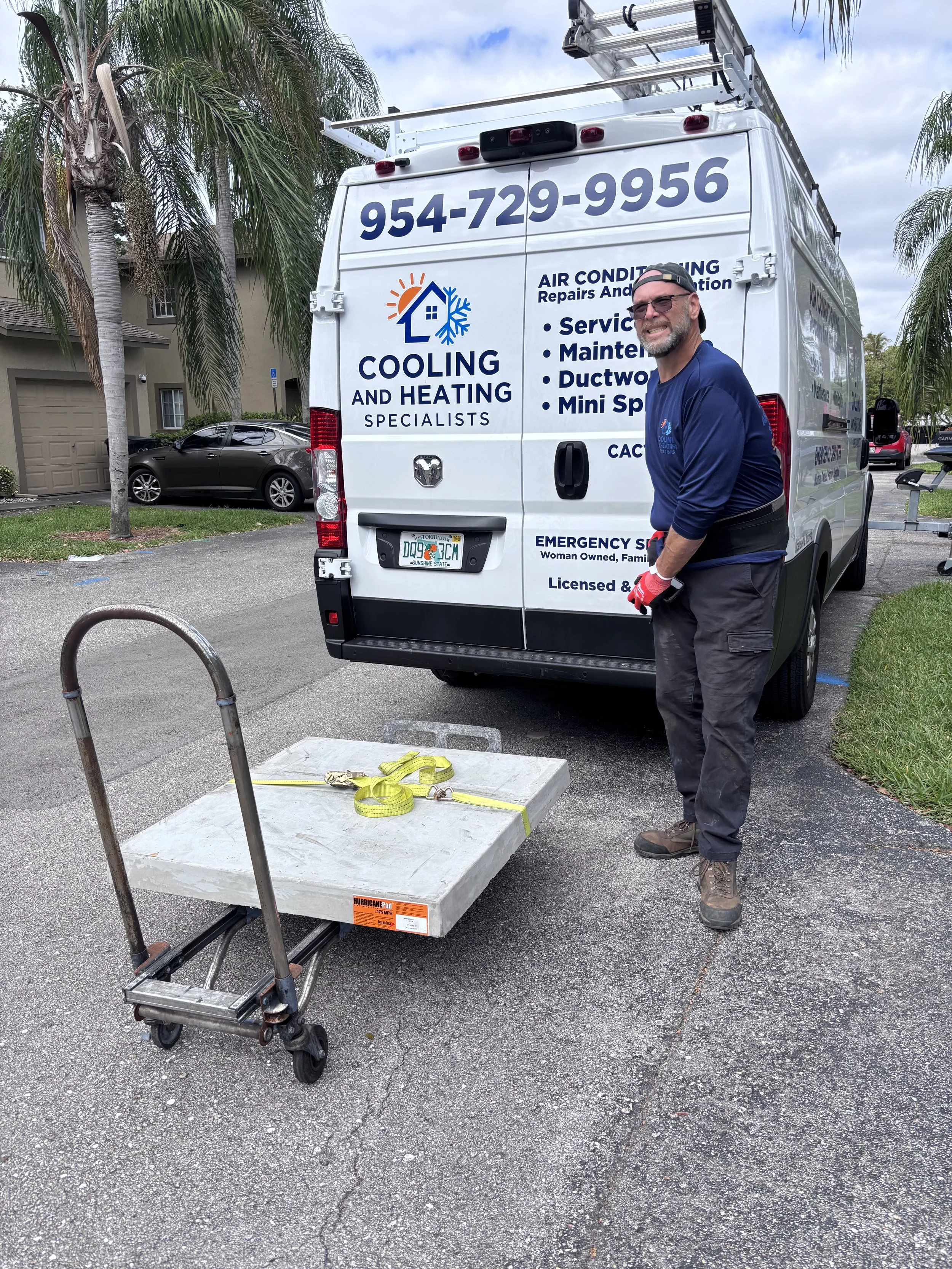
The new outdoor unit is set on a level pad, and the new indoor unit or air handler goes in. Level placement and proper support matter for how long your system lasts and how quietly it runs. This is also when we look closely at your connections, electrical, and drain line to make sure everything is ready for the new equipment instead of just hooking up what was already there.
Step 6: Connecting Lines, Electrical, and Drainage
Refrigerant lines, electrical connections, the thermostat, and the condensate drain all get connected and checked. In Florida, the drain line is especially important, since our humidity means a lot of moisture to move out of your home. A clogged or poorly set drain is one of the most common causes of water leaks later on.
Step 7: Testing and Startup
Before we call a job finished, the system gets a full startup and testing process. We check refrigerant charge, airflow, temperatures, electrical readings, and thermostat operation. This is where a proper installation separates itself from a rushed one. The system should be running exactly the way it was designed to before we leave.
Step 8: The Walkthrough
Last, we walk you through your new system. We show you how the thermostat works, where your filter goes and how often to change it, and what to expect in the first few days. You should never be handed the remote and left to figure it out on your own. We also go over your warranty and answer any questions you have.
How Long Does It Take
A straightforward replacement is often completed in a day, though timing depends on your home, your ductwork, and whether any additional work is needed. We will give you a realistic timeline before the job starts, so you can plan around it.
What You Can Do to Prepare
Clear a path to your indoor unit and outdoor unit, move any fragile items away from the work area, and make sure someone is available to answer questions and approve the final walkthrough. If you live in a condo or an HOA community, check whether approval is needed before the install date, since some communities have their own requirements.
Protecting Your Investment After Installation
A new system works best when it is looked after. Regular maintenance keeps it running efficiently and helps protect your warranty. Our maintenance plans are built for exactly this, so your new system keeps performing for years to come.
Thinking About a New System
If your AC is getting older or you are weighing repair against replacement, we are happy to take a look and give you an honest recommendation. Our team of licensed technicians serves Broward County and Palm Beach County from Lantana south through Boca Raton.
Cooling and Heating Specialists LLC 954-729-9956 | CoolingHeatingSpecialists.com Licensed & Insured | CAC1824395 Woman Owned, Family Operated
Nest Thermostats in South Florida: Pros, Cons, and What Homeowners Should Know
Nest Thermostats in South Florida: Pros, Cons, and What Homeowners Should Know
Smart thermostats have become one of the most popular home upgrades, and the Google Nest is the name we hear about most. Homeowners across Broward County ask us all the time whether a Nest is worth it, and the honest answer is that it depends on your system, your wiring, and how you live.
As a local, woman owned and family operated HVAC company, we install and service thermostats in homes, condos, and villas every week. Here's what we've learned about where the Nest shines and where it can cause problems, especially in our hot, humid South Florida climate.
What a Nest Thermostat Actually Does
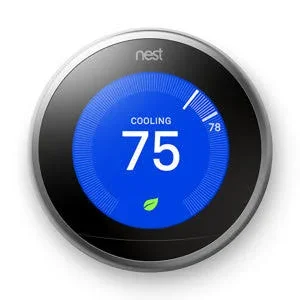
A Nest is a Wi Fi connected thermostat you can control from your phone. Instead of setting a fixed schedule by hand, the Learning model watches when you adjust the temperature and builds a schedule around your routine. It can also sense when nobody is home and switch to an energy saving temperature.
Google currently offers two main versions: the standard Nest Thermostat, which is more affordable, and the Nest Learning Thermostat, which has the full auto scheduling features. Both connect to the Google Home app for remote control and energy reports.
The Pros
Control from anywhere. You can raise or lower the temperature from your phone whether you're at work, on vacation, or up north for the summer. For snowbirds and seasonal residents, being able to check on a condo from hundreds of miles away is a real comfort.
It learns your routine. The Learning model picks up on your habits and adjusts automatically, so you aren't constantly reprogramming it.
Energy savings. Eco mode and monthly energy reports help you see where your cooling dollars go. Used well, a smart thermostat can help trim your electric bill.
Works with most systems. Nest is compatible with most standard central systems, including the heat pumps and heat strips found in many South Florida homes.
Keeps running when the internet doesn't. If your Wi Fi goes down after a storm, the thermostat still controls your system locally. You only lose remote access until the connection comes back.
Things to Know Before You Buy
It really wants a C wire. The C wire, or common wire, provides steady power to the thermostat. Many older homes and condos don't have one. Without it, the Nest tries to borrow power through the other wires, which can lead to short cycling, a fan that clicks on and off, or a battery that drains until the screen goes dark. A technician can usually add a C wire or a power adapter, but it's worth checking before you install.
Humidity control is limited. Most Nest models don't offer dedicated dehumidification control. In a climate where moisture often matters more than temperature, that's a real limitation.
Auto schedules can work against you. If the thermostat sets back too far while you're away, humidity can build up inside the home. That can leave rooms feeling clammy and invite musty odors.
Older models are losing support. Google has ended software support for the earliest Nest generations. If yours is one of the originals, it may be time to upgrade.
Higher upfront cost. A Nest costs more than a basic programmable thermostat, and installation may cost more if wiring upgrades are needed.
Why South Florida Is Different
Most smart thermostat advice is written for places with cold winters. Here, our systems run nearly year round, and the biggest comfort problem is usually humidity, not temperature.
That changes how you should use a smart thermostat. Avoid large temperature swings while you're away, since letting the house get too warm allows moisture to creep in. If you leave for the season, set a moderate temperature rather than shutting the system off, and consider a thermostat or add on that offers humidity control. Many condo and villa communities also have older air handlers and wiring, so a quick compatibility check before installing can save you a headache later.
So, Is a Nest Right for Your Home?
If you like smart features, want remote control, and your system has the right wiring, a Nest can be a great upgrade. If your home has an older system without a C wire, or humidity is a constant battle, a thermostat with dedicated dehumidification control or a simpler programmable model may serve you better.
The best first step is having a technician look at your system. At Cooling and Heating Specialists, we'll check your wiring, confirm compatibility, and recommend the thermostat that fits your home and your habits. No pressure, just straightforward advice from certified professionals.
Ready to talk thermostats? Call us at 954-729-9956 or email chs.hvacpros@gmail.com to schedule a visit.
Cooling and Heating Specialists LLC | Woman Owned, Family Operated | Licensed & Insured | CAC1824395
A Guide to AC Maintenance for Condo and Villa Communities
A Guide to AC Maintenance for Condo and Villa Communities
Condo and villa living comes with a different set of AC considerations than a standalone single family home. We work in a lot of these communities, including Wynmoor in Coconut Creek, and there are a few things that tend to come up again and again that are worth knowing.
Space Constraints Change How Units Are Installed
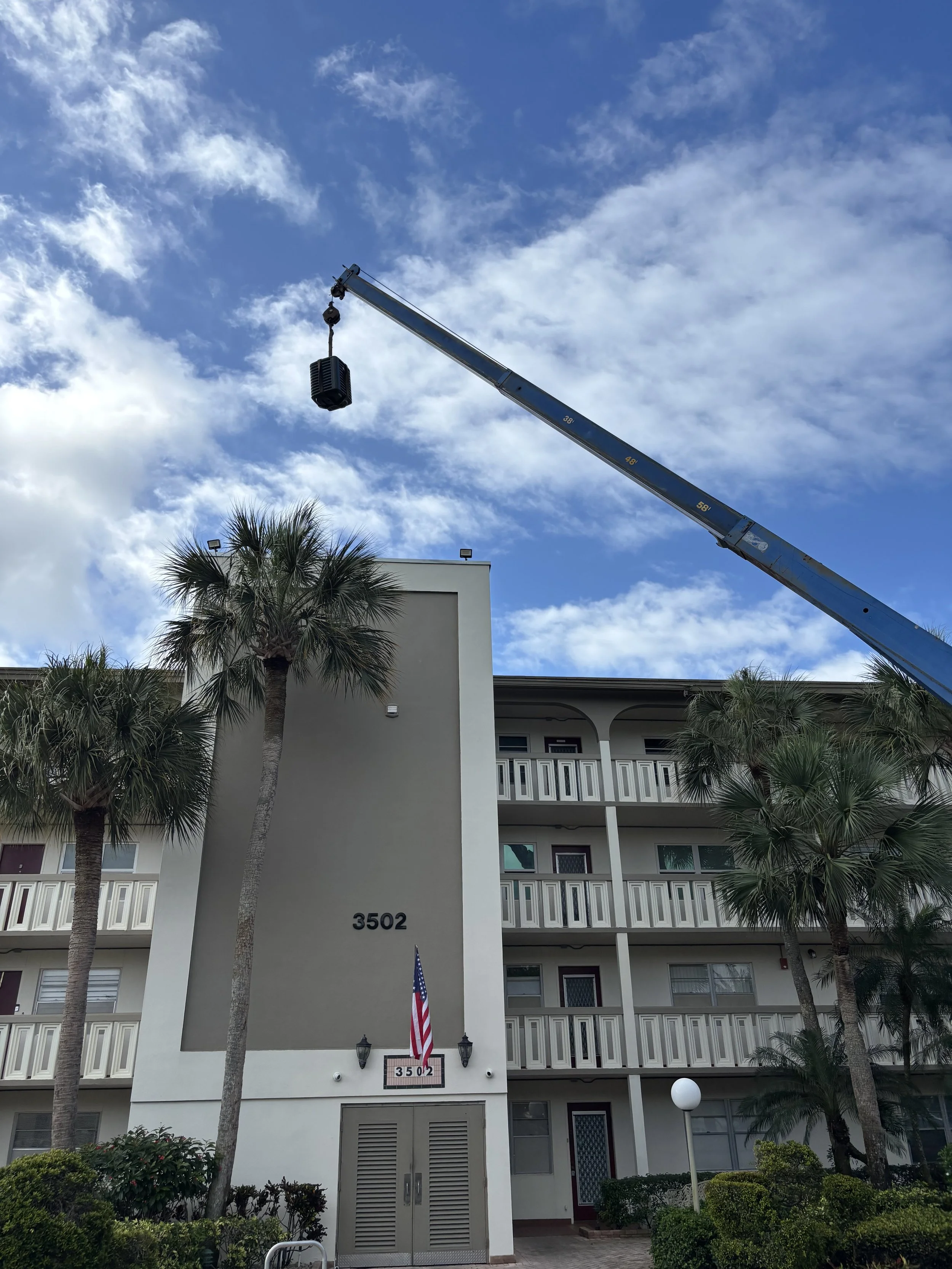
In a lot of condo and villa communities, the outdoor unit sits in a tighter space than it would at a typical house, sometimes tucked next to a patio, a shared wall, or a narrow side yard. That tighter placement can affect airflow around the unit, which matters for how efficiently it runs. If your unit seems to be working harder than it should, limited clearance around it is sometimes part of the reason.
Know What's Yours and What's the Association's
This is one of the most common points of confusion we run into. In many condo and villa communities, the homeowner is responsible for the AC system itself, while the association may handle certain exterior elements like structures or landscaping around the unit. It's worth knowing where that line falls in your specific community before you assume something is or isn't your responsibility. If you're not sure, it's a quick call to your association to clarify.
Shared Walls Mean Noise Matters More
In attached units, an AC system that's running louder than it should isn't just an efficiency concern, it can affect your neighbors too. A noisy system is often a sign of a loose part, a failing motor, or a unit that needs a tune up, and it's worth addressing sooner rather than later for that reason alone.
Smaller Units Don't Always Mean Simpler Maintenance
Condos and villas often have smaller HVAC systems than a large single family home, but that doesn't mean they need less attention. In fact, smaller systems in tighter spaces can sometimes show wear faster, especially with limited airflow around the outdoor unit. Regular maintenance matters just as much, if not more.
Age of the Community Matters
A lot of the condo and villa communities we work in, including Wynmoor, have units that have been in place for many years. Older systems in these communities benefit even more from routine checkups, since replacement parts can take longer to source and small issues are more likely to turn into bigger ones if left unaddressed.
What We Recommend
For condo and villa homeowners, we generally recommend a yearly or twice yearly maintenance visit, especially if your unit is older or you've noticed any changes in performance. Our maintenance plans are built with exactly this kind of routine care in mind, so nothing gets overlooked between visits.
We Know These Communities
We spend a lot of time working in Wynmoor and similar 55 plus communities throughout Coconut Creek and the surrounding area, so we understand the specific setup, the shared spaces, and the questions that tend to come up. Our team of licensed technicians is happy to help, whether it's routine maintenance or something that needs a closer look.
Cooling and Heating Specialists LLC 954-729-9956 | CoolingHeatingSpecialists.com Licensed & Insured | CAC1824395 Woman Owned, Family Operated

AC Safety Tips for Seniors During Florida Summers
AC Safety Tips for Seniors During Florida Summers
We spend a lot of time in senior communities around Coconut Creek, including Wynmoor, and one thing we hear often is that a reliable AC isn't a comfort issue, it's a safety issue. Florida heat is no joke, and a few simple habits can make a real difference in staying safe and comfortable all summer long.
Know the Signs Your AC Is Struggling
The biggest risk isn't usually a sudden total breakdown, it's a system that's slowly losing efficiency without anyone noticing until it's too hot in the house. If your home feels warmer than usual, if the air coming from the vents feels weak or not very cold, or if your system seems to be running constantly without much change in temperature, those are worth addressing before it becomes a bigger problem.
Don't Wait Until It's an Emergency
A lot of AC issues give some warning first. If something feels off, even something small, it's worth having it checked rather than waiting to see if it gets worse. Catching an issue early is almost always simpler and less stressful than dealing with no cooling at all during a heat wave.
Keep Your Filter Clean
A clogged air filter restricts airflow and makes your system work harder than it needs to, which can also mean less effective cooling throughout your home. Checking and replacing your filter regularly is one of the easiest things you can do yourself, and it's something we always check as part of a maintenance visit too.
Have a Plan for If Your AC Goes Out
It helps to know ahead of time who you'd call and how quickly they typically respond. Emergency AC failure during peak summer heat isn't something you want to be figuring out for the first time in the moment. Keeping a trusted number saved, and knowing your community's cooling areas or backup options if needed, is a smart step to take before you actually need it.
Schedule Routine Maintenance Instead of Waiting for Problems
A yearly or twice yearly checkup catches small issues, like a weak capacitor or a slow refrigerant leak, before they turn into a full system failure. This is especially worth it heading into the hottest stretch of the year, since a breakdown in July is a lot more stressful than a scheduled visit in the spring.
We Understand What Matters Here
We spend a lot of time working with seniors and in communities like Wynmoor, and we take extra care to explain things clearly, never rush a visit, and make sure you actually understand what's going on with your system, not just get handed a bill. If you're not sure whether something needs attention, we'd rather you call and ask than wait it out.
We're Here If You Need Us
Our team of licensed technicians proudly serves Coconut Creek, Wynmoor, and communities throughout Broward and Palm Beach County. We also offer a senior discount on repairs, just ask when you call.
Cooling and Heating Specialists LLC 954-729-9956 | CoolingHeatingSpecialists.com Licensed & Insured | CAC1824395 Woman Owned, Family Operated
This article is for general information and is not medical advice. If you or someone you know is experiencing symptoms of heat related illness, please contact a medical professional or emergency services.
Why Reliable AC Matters More as We Age
Why Reliable AC Matters More as We Age
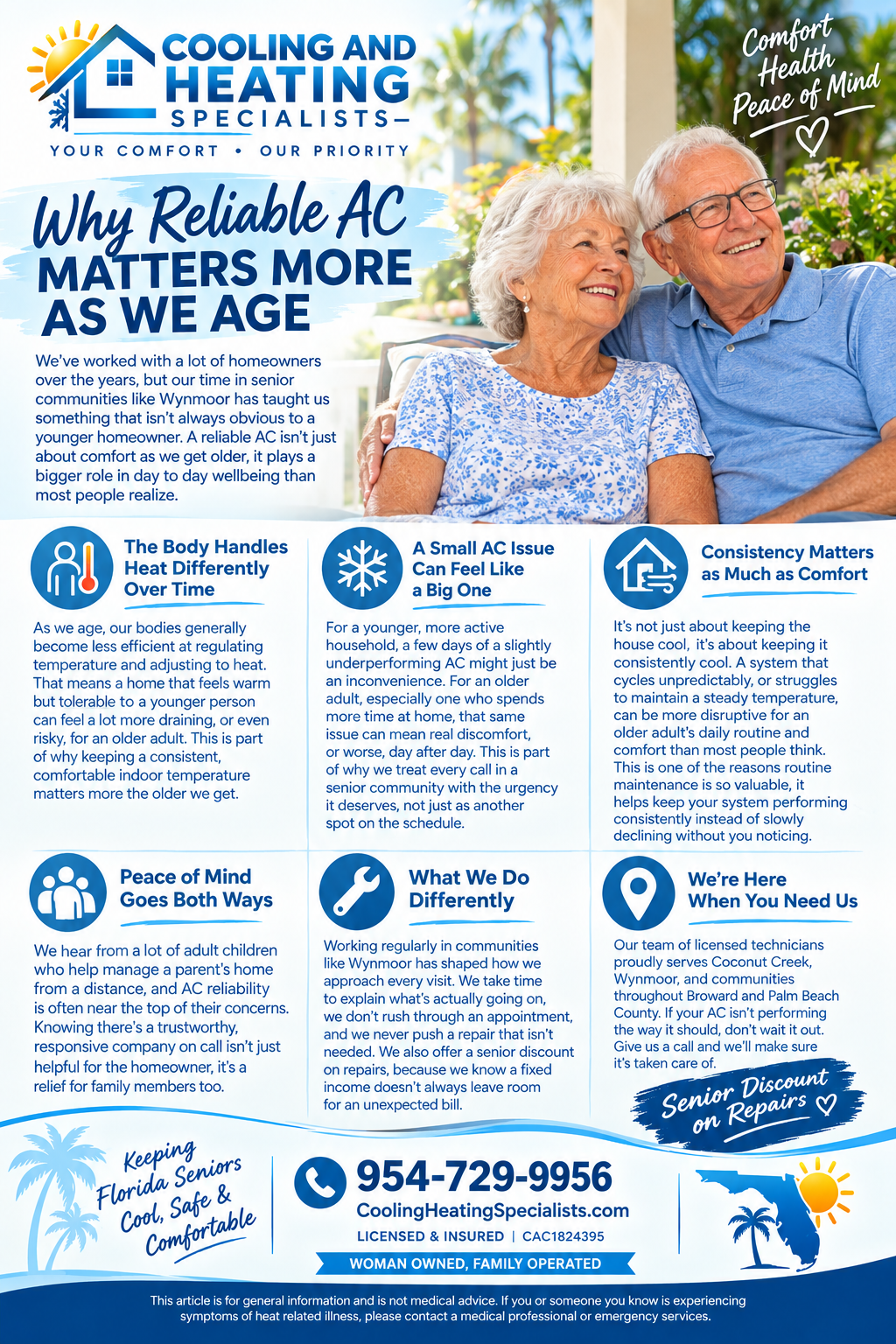
We've worked with a lot of homeowners over the years, but our time in senior communities like Wynmoor has taught us something that isn't always obvious to a younger homeowner. A reliable AC isn't just about comfort as we get older, it plays a bigger role in day to day wellbeing than most people realize.
The Body Handles Heat Differently Over Time
As we age, our bodies generally become less efficient at regulating temperature and adjusting to heat. That means a home that feels warm but tolerable to a younger person can feel a lot more draining, or even risky, for an older adult. This is part of why keeping a consistent, comfortable indoor temperature matters more the older we get.
A Small AC Issue Can Feel Like a Big One
For a younger, more active household, a few days of a slightly underperforming AC might just be an inconvenience. For an older adult, especially one who spends more time at home, that same issue can mean real discomfort, or worse, day after day. This is part of why we treat every call in a senior community with the urgency it deserves, not just as another spot on the schedule.
Consistency Matters as Much as Comfort
It's not just about keeping the house cool, it's about keeping it consistently cool. A system that cycles unpredictably, or struggles to maintain a steady temperature, can be more disruptive for an older adult's daily routine and comfort than most people think. This is one of the reasons routine maintenance is so valuable, it helps keep your system performing consistently instead of slowly declining without you noticing.
Peace of Mind Goes Both Ways
We hear from a lot of adult children who help manage a parent's home from a distance, and AC reliability is often near the top of their concerns. Knowing there's a trustworthy, responsive company on call isn't just helpful for the homeowner, it's a relief for family members too.
What We Do Differently
Working regularly in communities like Wynmoor has shaped how we approach every visit. We take time to explain what's actually going on, we don't rush through an appointment, and we never push a repair that isn't needed. We also offer a senior discount on repairs, because we know a fixed income doesn't always leave room for an unexpected bill.
We're Here When You Need Us
Our team of licensed technicians proudly serves Coconut Creek, Wynmoor, and communities throughout Broward and Palm Beach County. If your AC isn't performing the way it should, don't wait it out. Give us a call and we'll make sure it's taken care of.
Cooling and Heating Specialists LLC 954-729-9956 | CoolingHeatingSpecialists.com Licensed & Insured | CAC1824395 Woman Owned, Family Operated
This article is for general information and is not medical advice. If you or someone you know is experiencing symptoms of heat related illness, please contact a medical professional or emergency services.
Signs Your AC Needs Repair Before It Breaks Down Completely
Signs Your AC Needs Repair Before It Breaks Down Completely
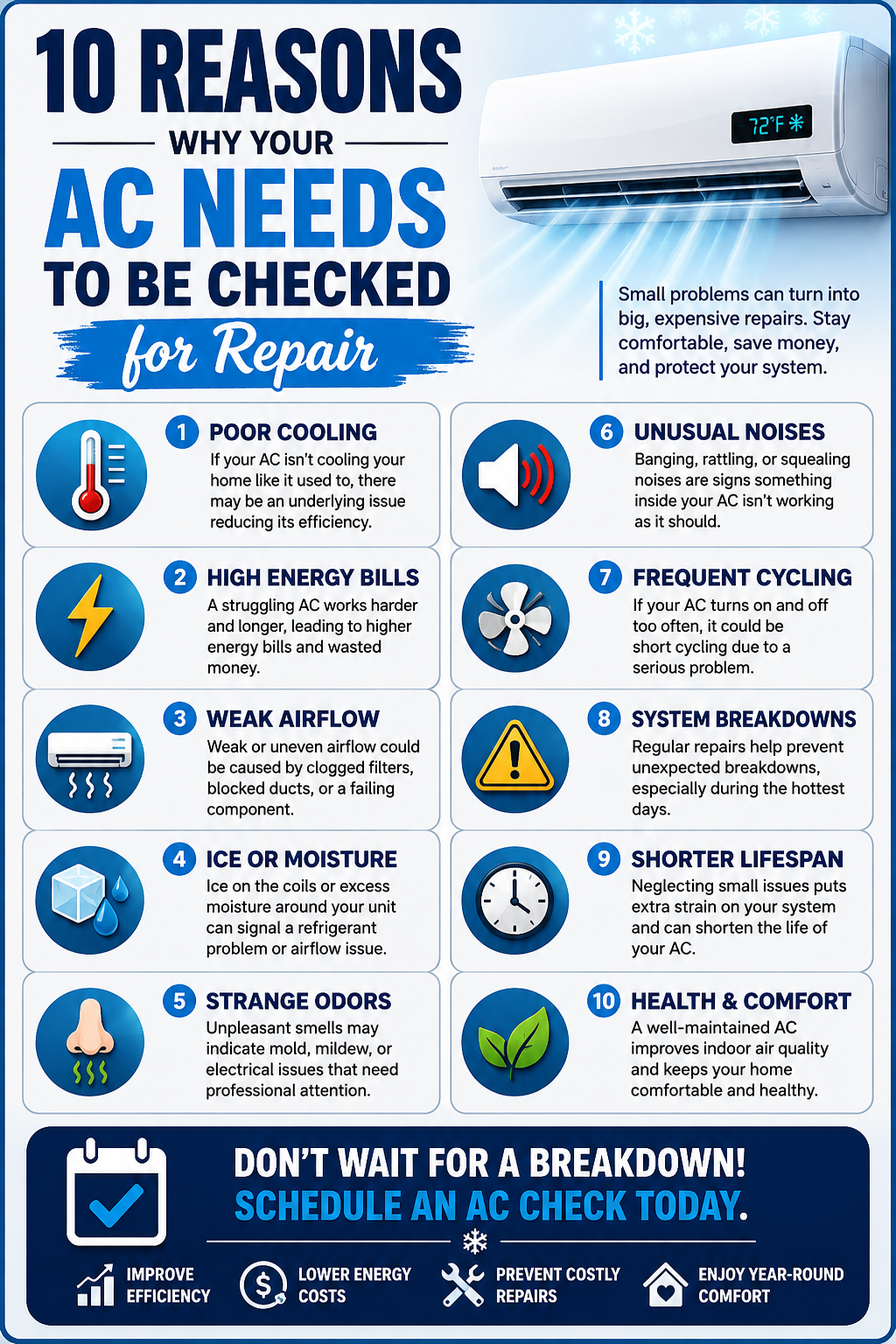
Most AC problems don't happen all at once. There's usually a warning sign or two before a system fails completely, especially here in South Florida where units run almost nonstop for most of the year. Catching these signs early can mean a simple repair instead of an emergency call on the hottest day of summer.
Here's what to watch for.
Your AC Is Running Longer Than It Used To
If your system used to cool the house quickly and now seems to run constantly without much change in temperature, that's often one of the first signs something is off. It could be a refrigerant issue, a failing component, or a system that's simply struggling to keep up.
Warm Air Coming From the Vents
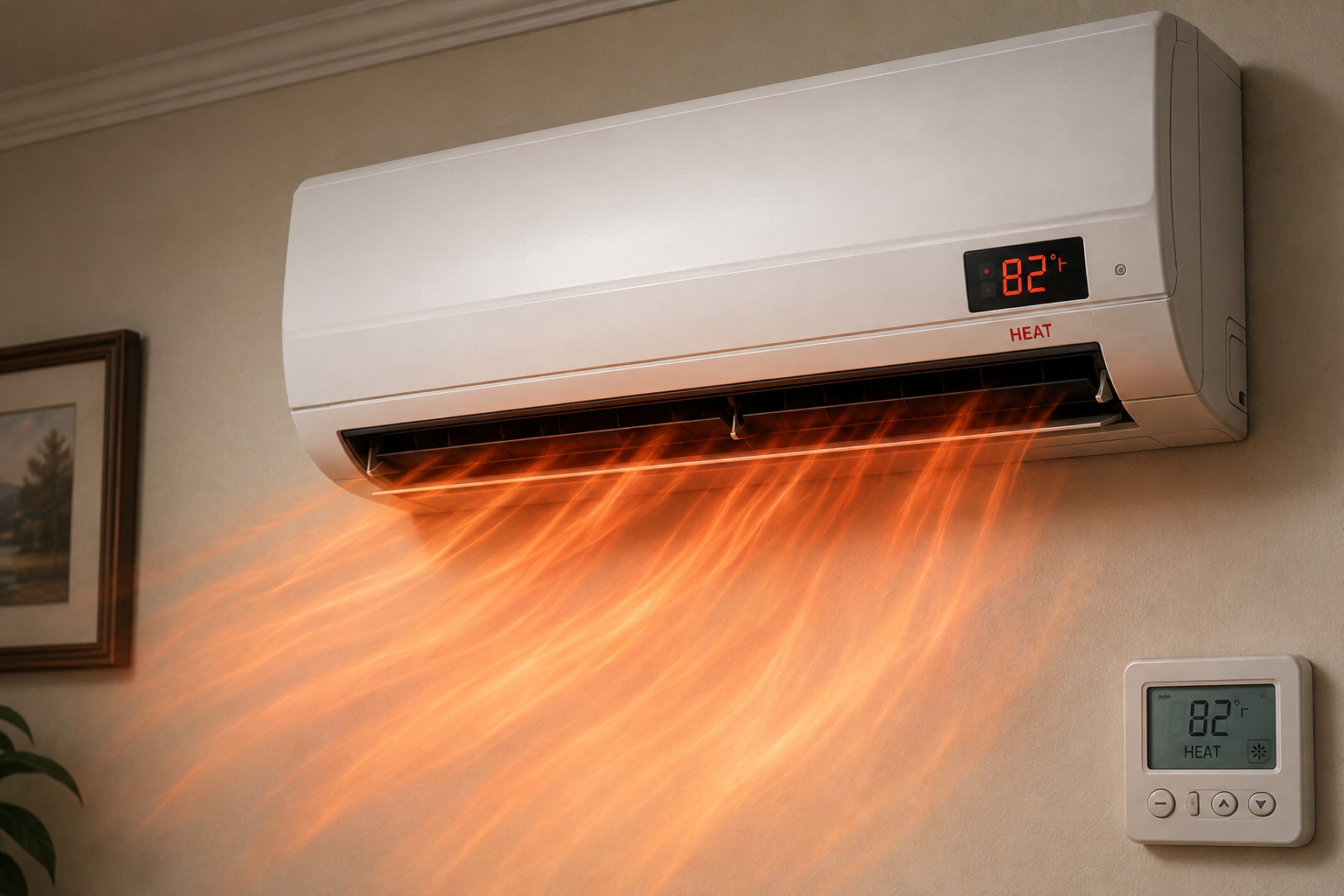
This is one of the most common complaints we get, and there are a few different reasons it happens, from a dirty filter to a bigger issue with the compressor. If your vents are blowing warm or barely cool air, it's worth having someone take a look before it turns into a no-cooling situation.
Strange Noises You Haven't Heard Before
A little hum is normal. Banging, grinding, squealing, or clicking that wasn't there before usually isn't. These sounds often point to a loose part, a failing motor, or something rubbing against a component that shouldn't be touching it.
Higher Energy Bills With No Clear Reason
If your electric bill is creeping up and your habits haven't changed, your AC could be working harder than it should to do its job. Inefficient systems often show up on your utility bill before they show up as a full breakdown.
Water Pooling Near the Indoor Unit
A little condensation is normal, but visible pooling or water damage near your indoor unit usually means a clogged drain line or a bigger issue that needs attention. Left alone, this can lead to water damage in your home, not just your AC.
Uneven Cooling Room to Room
If one room feels like a sauna and another feels fine, that's often a sign of a duct issue, a failing component, or a system that's no longer sized correctly for your home's needs.
Your System Is Cycling On and Off Too Frequently
Short cycling, where your AC turns on and off more often than it should, puts extra wear on the system and usually points to an underlying issue that's worth diagnosing early.
When to Call a Professional
If any of this sounds familiar, it's worth getting it checked out before it turns into a bigger repair or a full system failure. Our team of licensed technicians serves homeowners throughout Broward County and Palm Beach County from Lantana south through Boca Raton, and we always give you honest, straightforward recommendations. No upsells, just what your system actually needs.
why Isnt My AC Working?
Why Your AC Is Blowing Warm Air (and What It Usually Means)
Few things are more frustrating in a South Florida summer than walking up to your vents expecting cold air and getting warm air instead. Before you assume the worst, it helps to know what's actually going on. Some causes are quick fixes. Others need a licensed technician. Here's how to tell the difference.
Check the Thermostat First
This sounds obvious, but it's worth ruling out before anything else. Make sure the thermostat is set to cool, not fan only, and that the temperature is actually set below the current room temperature. If you have a smart thermostat, double check that a schedule or setting hasn't been changed accidentally.
A Dirty Air Filter
A clogged filter restricts airflow across the system, which can cause the coil to freeze up and blow warm air as a result. This is one of the easiest things to check yourself. If your filter looks gray and dusty, replace it and see if performance improves over the next few hours.
Low Refrigerant
If your system is low on refrigerant, usually from a leak somewhere in the line, it won't be able to properly cool the air passing through it. This isn't something you can top off yourself, and running a system low on refrigerant for too long can cause damage to the compressor. This one needs a licensed technician.
A Frozen Evaporator Coil
Restricted airflow, low refrigerant, or a dirty coil can all cause your evaporator coil to freeze over. When this happens, your system may blow warm air until the ice melts, and it needs to fully thaw before a technician can properly diagnose the issue.
The Outdoor Unit Isn't Running
Your indoor unit relies on the outdoor condenser to actually cool the air. If the outdoor fan isn't spinning or the unit sounds like it's not running at all, that's often the source of the problem. This could be an electrical issue, a failed capacitor, or a tripped breaker.
A Failing Compressor
The compressor is essentially the heart of your AC system. If it's failing, your unit may run but won't produce cold air. This is one of the more serious and costly issues, and it's worth having a technician diagnose it early rather than waiting for a full breakdown.
Ductwork Issues
Sometimes the problem isn't the unit at all. Leaky or disconnected ductwork can let cool air escape before it ever reaches your vents, especially in attics where duct connections can loosen over time.
What to Do Next
If you've checked the thermostat and the filter and you're still getting warm air, it's time to call in a professional. Our team of licensed technicians serves Broward County and Palm Beach County from Lantana south through Boca Raton, and we'll diagnose the actual issue honestly, without pushing repairs y
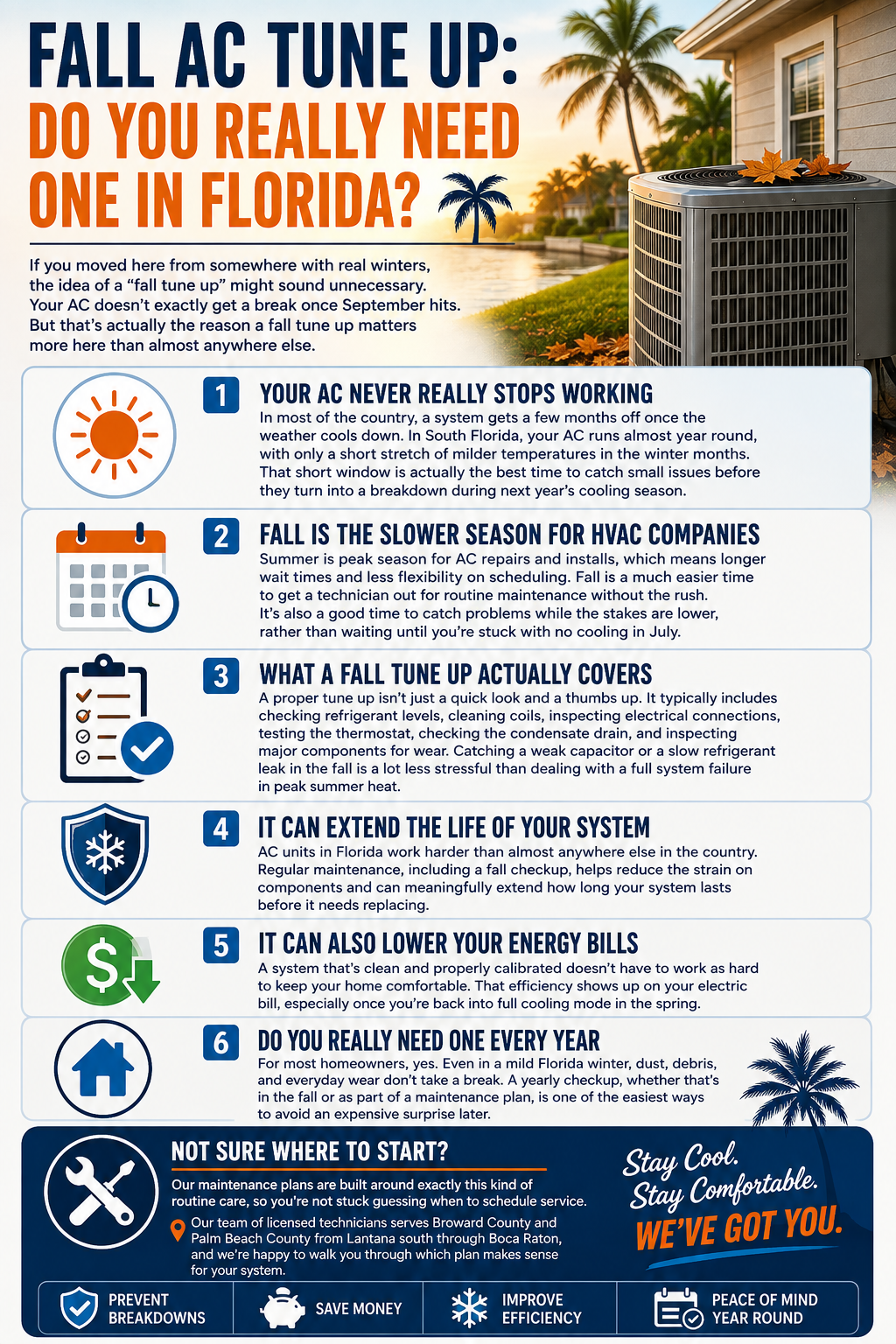
Fall AC Tune Up: Do You Really Need One in Florida?
Fall AC Tune Up: Do You Really Need One in Florida?
If you moved here from somewhere with real winters, the idea of a "fall tune up" might sound unnecessary. Your AC doesn't exactly get a break once September hits. But that's actually the reason a fall tune up matters more here than almost anywhere else.
Your AC Never Really Stops Working
In most of the country, a system gets a few months off once the weather cools down. In South Florida, your AC runs almost year round, with only a short stretch of milder temperatures in the winter months. That short window is actually the best time to catch small issues before they turn into a breakdown during next year's cooling season.
Fall Is the Slower Season for HVAC Companies
Summer is peak season for AC repairs and installs, which means longer wait times and less flexibility on scheduling. Fall is a much easier time to get a technician out for routine maintenance without the rush. It's also a good time to catch problems while the stakes are lower, rather than waiting until you're stuck with no cooling in July.
What a Fall Tune Up Actually Covers
A proper tune up isn't just a quick look and a thumbs up. It typically includes checking refrigerant levels, cleaning coils, inspecting electrical connections, testing the thermostat, checking the condensate drain, and inspecting major components for wear. Catching a weak capacitor or a slow refrigerant leak in the fall is a lot less stressful than dealing with a full system failure in peak summer heat.
It Can Extend the Life of Your System
AC units in Florida work harder than almost anywhere else in the country. Regular maintenance, including a fall checkup, helps reduce the strain on components and can meaningfully extend how long your system lasts before it needs replacing.
It Can Also Lower Your Energy Bills
A system that's clean and properly calibrated doesn't have to work as hard to keep your home comfortable. That efficiency shows up on your electric bill, especially once you're back into full cooling mode in the spring.
Do You Really Need One Every Year
For most homeowners, yes. Even in a mild Florida winter, dust, debris, and everyday wear don't take a break. A yearly checkup, whether that's in the fall or as part of a maintenance plan, is one of the easiest ways to avoid an expensive surprise later.
Not Sure Where to Start
Our maintenance plans are built around exactly this kind of routine care, so you're not stuck guessing when to schedule service. Our team of licensed technicians serves Broward County and Palm Beach County from Lantana south through Boca Raton, and we're happy to walk you through which plan makes sense for your system.
Ductwork 101: Signs Your Ducts Need Attention, Not Just Your Unit
Ductwork 101: Signs Your Ducts Need Attention, Not Just Your Unit
When an AC system isn't keeping up, most homeowners assume the problem is the unit itself. Sometimes that's true. But just as often, the real issue is hiding somewhere you can't see: inside your ductwork. Leaky, disconnected, or poorly insulated ducts can undo even the best AC system, and it's one of the most overlooked issues we run into with homeowners across Broward and Palm Beach County.
Here's how to tell if your ducts, not just your unit, need a second look.
Why Ductwork Matters as Much as Your AC Unit
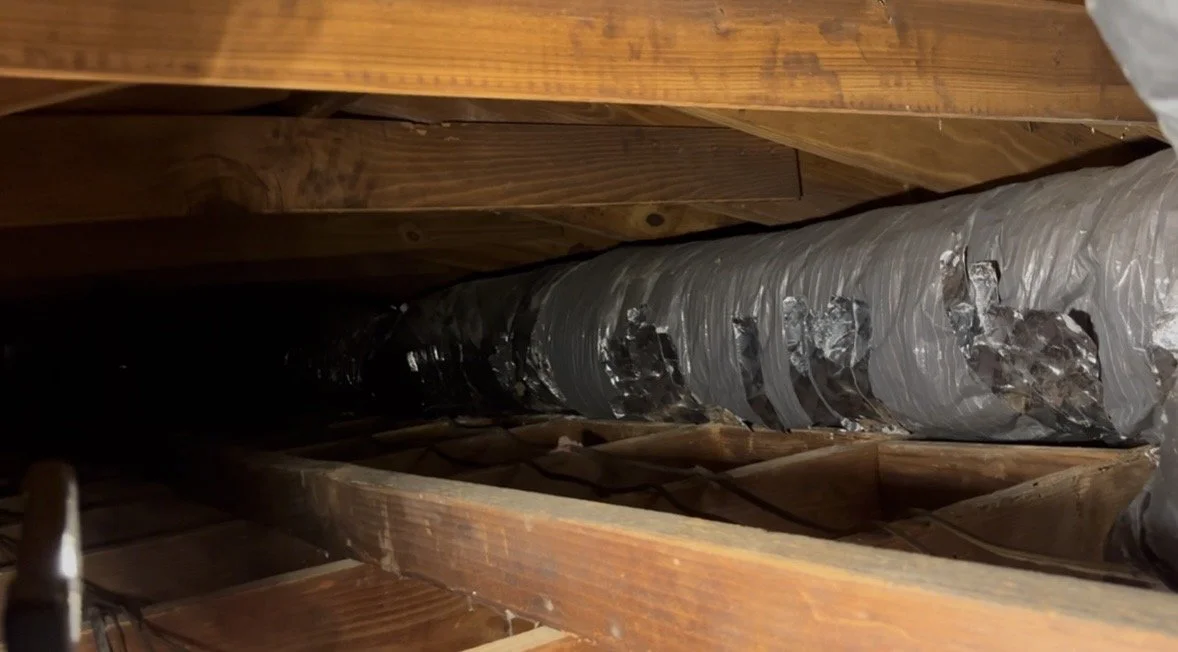
Your ductwork is the delivery system for the cool air your AC works so hard to produce. Even a perfectly functioning unit can't keep your home comfortable if a meaningful percentage of that cooled air is escaping into your attic, walls, or crawlspace before it ever reaches your living space.
The Department of Energy estimates that the average home loses about 20 to 30 percent of the air moving through its ductwork due to leaks, holes, or poor connections. In a South Florida home, where your system runs nearly year-round, that's a significant amount of wasted energy and wasted money every single month.
Sign #1: Some Rooms Are Noticeably Warmer Than Others
If one bedroom always feels warm no matter what your thermostat says, that's often a ductwork issue rather than a problem with your unit. Uneven cooling usually points to a leak, a disconnected duct, or ductwork that wasn't sized correctly for that part of your home.
Sign #2: Your Energy Bills Keep Climbing Without a Clear Reason
If your AC system is running normally and your habits haven't changed, but your energy bill keeps creeping up, leaky ductwork is one of the most common (and most overlooked) culprits. Cooled air escaping into unconditioned spaces like your attic means your system has to run longer to make up the difference, and that shows up on your bill before it shows up as an obvious symptom.
Sign #3: Excess Dust Throughout Your Home
Ductwork that has small holes or gaps doesn't just leak cooled air out, it can pull unconditioned, dusty air in from your attic or crawlspace as it moves through your home. If you're dusting more often than you used to, or you're noticing dust buildup around your vents specifically, it's worth having your ductwork inspected.
Sign #4: Your System Runs Constantly Without Keeping Up
If your AC seems to run nonstop but your home never quite reaches a comfortable temperature, that's a sign air isn't making it where it needs to go. This is often mistaken for a failing unit, when the real issue is air escaping through the ductwork before it reaches your vents.
Sign #5: Strange Noises Coming From Your Vents
Whistling, rattling, or popping sounds coming from your ductwork usually point to loose connections, gaps, or ducts that have come apart at a joint. These noises tend to get more noticeable over time, not less, so they're worth addressing before they turn into a bigger airflow issue.
Sign #6: Visible Damage, Sagging, or Disconnected Sections
If you can access your attic, it's worth taking a look at your exposed ductwork every so often. Sagging sections, crushed ducts, or connections that have come apart are relatively common in Florida homes, especially in older construction, and they're usually an easy fix once they're identified.
Why This Matters More in South Florida Homes
Because AC systems in Broward and Palm Beach County run almost year-round, ductwork issues here compound faster than they would in a climate where AC only runs part of the year. A leak that might be a minor inconvenience elsewhere can mean months of wasted energy and inconsistent comfort in a Florida home.
Humidity adds another layer to this. Leaky ductwork in an attic space can pull humid air into your system, making your home feel muggier even when the temperature seems right, and in some cases contributing to mold or moisture issues over time.
What a Ductwork Inspection Actually Involves
A proper inspection looks at your entire duct system, not just the areas you can see. That typically includes checking for leaks at seams and connections, verifying insulation is intact, confirming ducts are properly sized for each room, and making sure nothing has become disconnected or crushed over time.
If leaks are found, sealing and reinsulating ductwork is often far less invasive (and less expensive) than homeowners expect, and it can make a noticeable difference in comfort and energy bills right away.
Frequently Asked Questions
How do I know if my ductwork is the problem instead of my AC unit? Uneven temperatures between rooms, rising energy bills without a clear cause, and a system that runs constantly without keeping up are all common signs the issue is in your ductwork rather than your unit.
Can leaky ductwork really affect my energy bill that much? Yes. The Department of Energy estimates homes lose 20 to 30 percent of conditioned air through duct leaks on average, which can meaningfully increase energy costs over time.
Is duct sealing a big, invasive repair? Not usually. Most duct sealing and insulation repairs are far less disruptive than homeowners expect, and they often make a noticeable difference in comfort right away.
How often should ductwork be inspected in a Florida home? Since South Florida systems run nearly year-round, we recommend having your ductwork checked as part of your regular AC maintenance, especially in homes over 10 years old.
Think Your Ductwork Might Be the Issue?
If you're dealing with uneven cooling, rising bills, or a system that just can't seem to keep up, the problem might not be your AC unit at all. We're happy to take a look at your full system, ductwork included, and give you a straightforward answer.
Cooling and Heating Specialists LLC 📞 954-729-9956 📧 CHS.HVACPros@gmail.com 🌐 CoolingHeatingSpecialists.com
Licensed & Insured | CAC1824395 | EPA 608 Ce
5 AC Myths That Could Be Costing You Money
5 AC Myths That Could Be Costing You Money
A lot of what homeowners believe about their AC systems gets passed down from a parent, a neighbor, or a quick internet search that isn't quite accurate. Some of these habits feel like they should save money or help your system run better. In reality, several of the most common AC myths do the opposite, quietly costing homeowners across Broward County and Palm Beach County more on repairs and energy bills every year.
Here are five we hear often, and the truth behind each one.
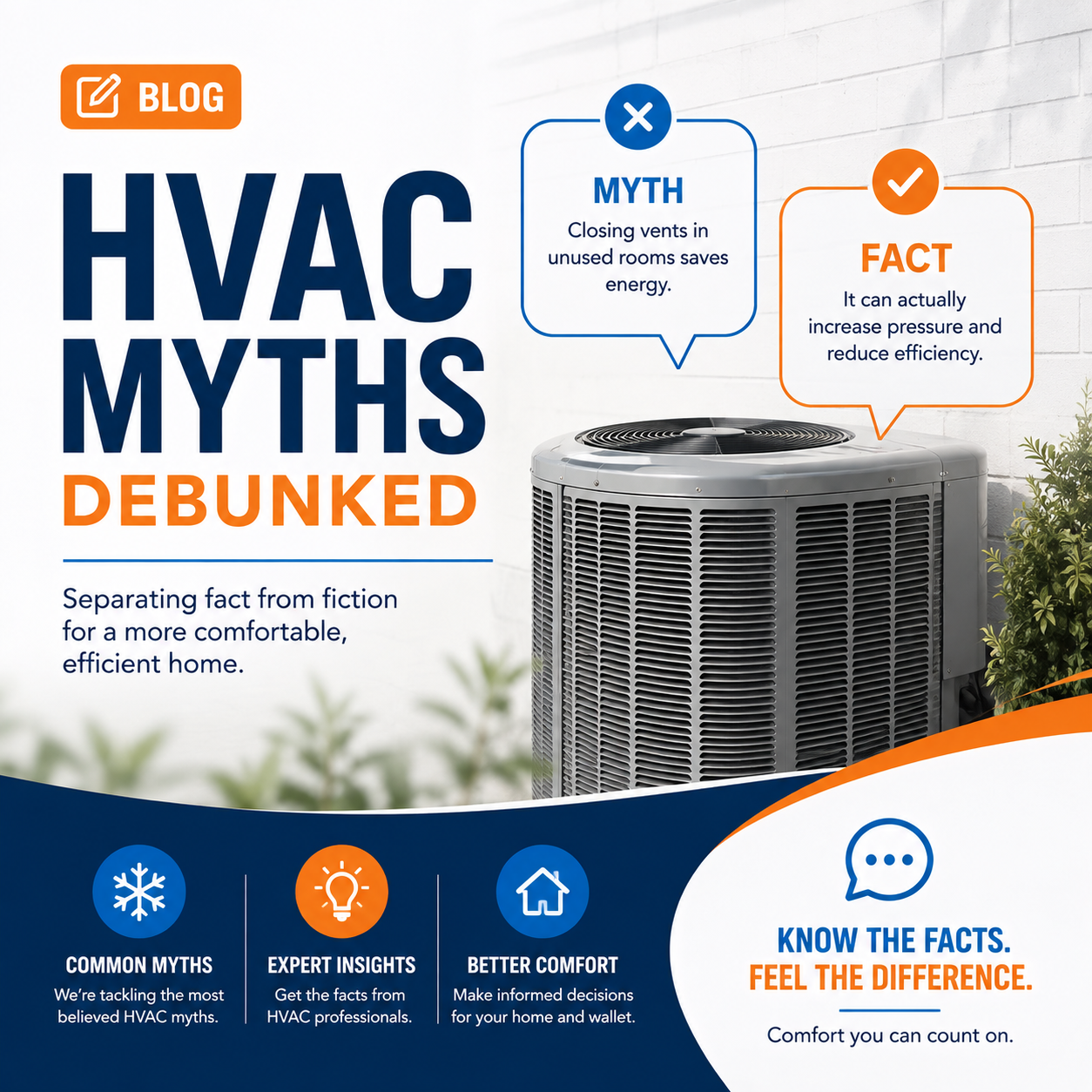
Myth #1: Closing Vents in Unused Rooms Saves Energy
This is probably the most common myth we run into, and it makes sense on the surface. If a room isn't being used, why cool it?
The problem is that your AC system is designed to move a specific amount of air through your entire ductwork system. Closing vents doesn't stop that air from being pushed through, it just builds up pressure in your ducts with nowhere to go. That extra pressure can lead to duct leaks, reduced airflow throughout the rest of your home, and your system working harder than it should, which often shows up as higher energy bills instead of lower ones.
The truth: Keep your vents open throughout your home, even in rooms you don't use often, unless your system was specifically designed with zoning in mind.
Myth #2: A Bigger AC Unit Is Always Better
It's tempting to think that a bigger, more powerful system will cool your home faster and more effectively. In reality, an oversized AC unit creates its own set of problems.
An AC system that's too large for your home cools the air quickly, but shuts off before it has time to properly remove humidity from the air. That leaves your home feeling cool but sticky, which is exactly the kind of muggy discomfort a lot of South Florida homeowners deal with even when their thermostat says the temperature is right. On top of that, a system that short cycles like this wears down faster and drives up repair costs over time.
The truth: The right size system for your home is based on square footage, insulation, sun exposure, and a proper load calculation, not just "bigger is better."
Myth #3: Setting Your Thermostat Lower Cools Your Home Faster
We covered this one in more detail in a previous post, but it's worth repeating because it's one of the most common (and costly) misunderstandings out there.
Your AC cools at the same rate no matter what temperature you set it to. Setting your thermostat to 65°F instead of 74°F doesn't make your home reach a comfortable temperature any faster. It just means your system keeps running well past the point you actually wanted, using more energy in the process.
The truth: Set your thermostat to the temperature you actually want, and let your system reach it at its normal pace.
Myth #4: You Only Need to Change Your Filter Once or Twice a Year
This myth causes more system strain than people realize, especially here in South Florida, where AC systems run nearly year-round.
A dirty filter restricts airflow, forces your system to work harder, and can even cause your evaporator coil to freeze up. That extra strain doesn't just raise your energy bill, it shortens the lifespan of components that are expensive to repair or replace.
The truth: Most homes need a filter change every 1 to 3 months, depending on household size, pets, and how often your system runs. In Florida's heat and humidity, checking monthly is a smart habit.
Myth #5: Regular Maintenance Isn't Necessary If Nothing's Wrong
This is an easy trap to fall into. If your AC seems to be running fine, it's tempting to skip a tune-up and save the money.
The problem is that a lot of AC issues, a weak capacitor, a dirty coil, low refrigerant, don't show obvious symptoms until they cause a bigger failure. By the time you notice something's wrong, you're often looking at a repair bill that could have been a routine maintenance visit instead. Regular maintenance also keeps your system running efficiently, which affects your energy bill every single month, not just during a breakdown.
The truth: Annual (or seasonal) maintenance is one of the most cost-effective habits a homeowner can have. It's designed to catch small issues before they become expensive ones.
Why These Myths Matter More in South Florida
Homeowners throughout Broward and Palm Beach County put more demand on their AC systems than most of the country, simply because our systems run almost constantly. That means small inefficiencies, like a closed vent or an oversized unit, compound faster here than they would in a climate where AC only runs a few months a year.
Frequently Asked Questions
Does closing AC vents in unused rooms actually save money? No. It typically increases pressure in your ductwork, which can lead to leaks and reduced efficiency, often raising energy costs instead of lowering them.
Is it better to oversize an AC unit for extra cooling power? No. An oversized unit cools too quickly without properly removing humidity, leading to a home that feels cool but damp, along with more wear on the system over time.
How often should I really change my AC filter in Florida? Most homes should check their filter monthly and replace it every 1 to 3 months, since Florida's year-round AC use causes filters to clog faster than in cooler climates.
Can skipping maintenance really lead to bigger repair costs? Yes. Many common AC issues don't show clear warning signs until they cause a larger failure. Routine maintenance is designed to catch these problems early, before they become expensive.
Get the Real Answer for Your System
If you're not sure whether your home is set up efficiently, or if any of these myths sound a little too familiar, we're happy to take a look and give you an honest, straightforward answer.
Cooling and Heating Specialists LLC 📞 954-729-9956 📧 CHS.HVACPros@gmail.com 🌐 CoolingHeatingSpecialists.com
Licensed & Insured | CAC1824395 | EPA 608 Certified
The Best Thermostat Setting for South Florida Summers (and Why 78°F Isn't Just a Number)
The Best Thermostat Setting for South Florida Summers (and Why 78°F Isn't Just a Number)
If you've ever argued with a family member over the thermostat, you're not alone. It's one of the most common questions we get from homeowners across Broward County and Palm Beach County: what's the "right" temperature to set your AC to during a South Florida summer? The answer isn't just about comfort. It's about your energy bill, your system's lifespan, and how your home handles our year-round humidity.
Here's what actually matters, and why 78°F keeps coming up as the number to know.
Why 78°F Is the Benchmark
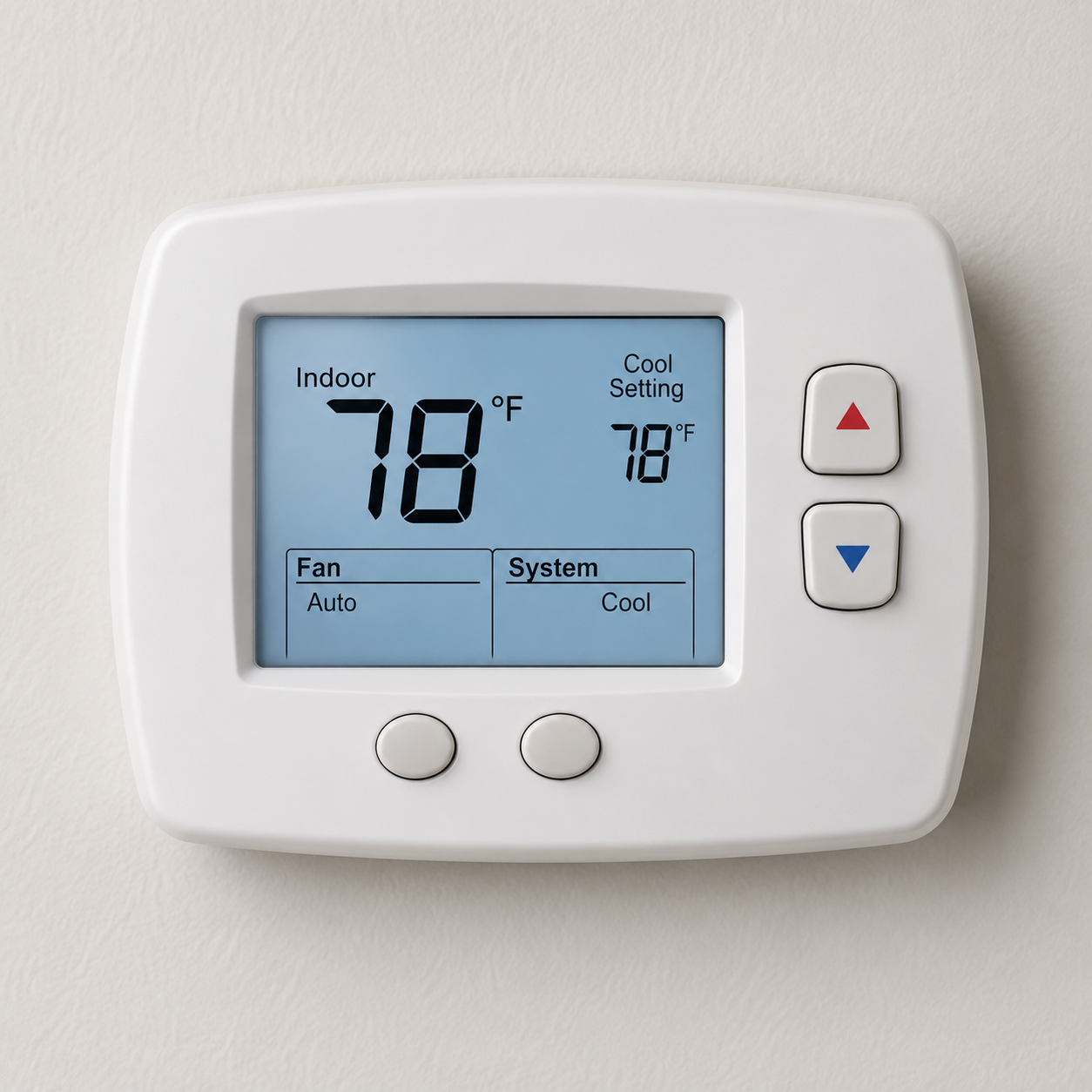
The U.S. Department of Energy recommends setting your thermostat to 78°F when you're home during the summer months. It's not an arbitrary number. It's the point where most homes stay comfortable while your AC system isn't working overtime to fight the heat.
Every degree lower than 78°F can increase your cooling costs by roughly 3 to 5 percent. In a South Florida summer, where your system may run nearly around the clock, that difference adds up fast on your monthly electric bill.
That said, 78°F is a starting point, not a strict rule. Some homes run a little warmer or cooler depending on insulation, sun exposure, and how many people are usually home. The goal is finding the highest setting that still feels comfortable for your household.
Why Humidity Changes the Equation Here
Homeowners in Broward and Palm Beach County deal with something a lot of the country doesn't have to think about as much: humidity. And humidity affects how warm or cool a room actually feels, regardless of what the thermostat says.
A room at 78°F with high humidity can feel noticeably warmer than a room at 78°F with humidity under control. That's why a well-maintained AC system, one that's actually removing moisture from the air as it cools, makes a bigger difference in comfort than simply lowering the temperature a few more degrees.
If your home still feels muggy even when your thermostat is set low, that's often a sign your system isn't dehumidifying properly, not a sign you need to crank the temperature down further.
What to Set It to When You're Away
When you're out of the house, whether it's a workday or you're one of the many South Florida homeowners who travel during part of the year, setting your thermostat a few degrees higher (around 82°F to 85°F) can save on energy costs without putting unnecessary strain on your system.
The key is avoiding two extremes:
Turning your AC off completely, which lets humidity build up and can lead to mold or musty odors in a Florida home
Leaving it set unnecessarily low all day when no one's there to enjoy it
A smart or programmable thermostat makes this easy to automate, so you're not manually adjusting it every time you leave the house.
Common Thermostat Mistakes We See
A few habits tend to work against homeowners more than they realize:
Setting it drastically lower to cool the house faster. Your AC cools at the same rate no matter what temperature you set. Dropping it to 65°F won't cool your home any faster than setting it to 74°F, it just means it'll keep running longer than necessary once your home reaches a comfortable temperature.
Constantly adjusting the thermostat throughout the day. Frequent changes make your system work harder, cycling on and off more than needed. Picking a consistent temperature and sticking with it is usually more efficient.
Ignoring the "Auto" vs. "On" fan setting. Keeping your fan set to "Auto" allows your system to properly remove humidity between cooling cycles. Setting it to "On" keeps air circulating constantly, which can actually push moisture back into your home between cycles.
A Few More Tips to Get the Most Out of Your Setting
Close blinds or curtains during peak sun hours to reduce how hard your system has to work
Use ceiling fans set to spin counterclockwise in the summer to help distribute cool air
Keep vents open and unblocked throughout your home so air circulates evenly
Schedule regular maintenance so your system is actually capable of hitting your target temperature efficiently
When Your Thermostat Setting Isn't the Real Problem
Sometimes homeowners set their thermostat perfectly and still feel like their home isn't cooling the way it should. If that sounds familiar, the issue usually isn't the setting, it's the system. Dirty coils, low refrigerant, clogged filters, or an aging unit can all prevent your AC from keeping up, no matter what number you choose.
If you've optimized your thermostat and you're still uncomfortable in your own home, it's worth having a technician take a look.
Frequently Asked Questions
What is the best AC temperature for a Florida summer? 78°F is the benchmark recommended by the Department of Energy for when you're home, though comfort can vary slightly based on your home's insulation and humidity levels.
Is 72°F too cold for an AC setting in South Florida? It's not "too cold," but it will increase your energy costs and put more strain on your system compared to a higher setting, without necessarily improving comfort.
Should I turn my AC off completely when I'm not home? No. In South Florida's humidity, turning your system off completely can lead to moisture buildup, mold, and musty odors. Setting it a few degrees higher while you're away is a better approach.
Does a smart thermostat actually save money? Yes. A smart or programmable thermostat automates temperature adjustments throughout the day, which typically leads to more consistent energy savings than manual adjustments.
Still Not Feeling Comfortable at 78°F?
If your home isn't holding a comfortable temperature no matter how you adjust your thermostat, that's usually a sign your system needs attention, not your settings. We're happy to take a look and give you an honest answer about what's going on.
Cooling and Heating Specialists LLC 📞 954-729-9956 📧 CHS.HVACPros@gmail.com 🌐 CoolingHeatingSpecialists.com
Licensed & Insured | CAC1824395 | EPA 608 Certifi
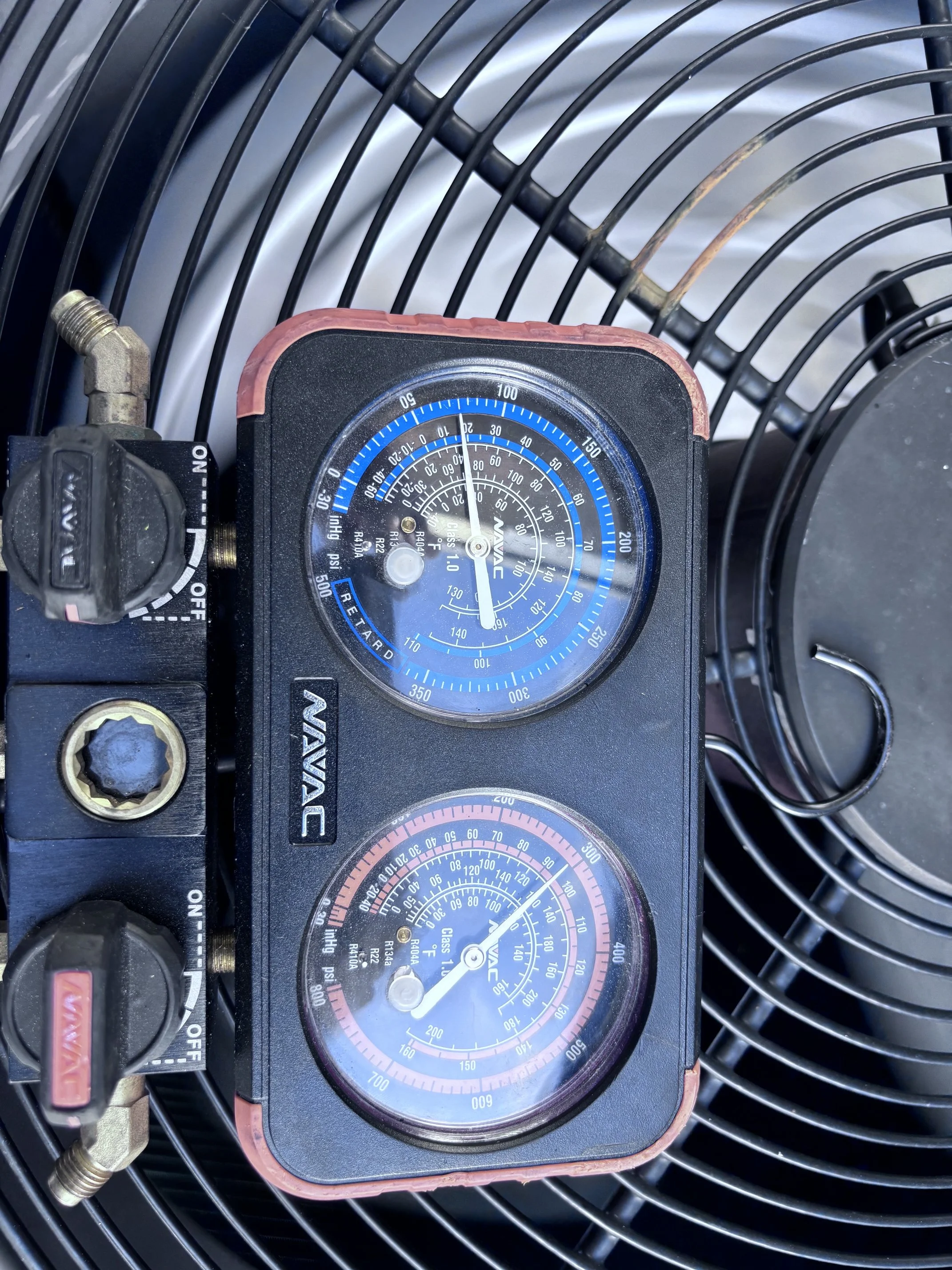
Why Is My AC Humming But Not Cooling?
Why Is My AC Humming But Not Cooling? (And Why Your Drain Line Matters Too)
If you've ever walked past your outdoor AC unit and heard it humming, but felt no cool air coming from your vents, you're not imagining things. That humming sound is actually your system telling you something specific is wrong, and in most cases, it points to one part: a failing capacitor.
At Cooling and Heating Specialists, we run into this call constantly across Broward County and southern Palm Beach County, especially during the hotter months when systems are working overtime. Here's what's actually happening, and why a second, less obvious problem often shows up alongside it.
What a Capacitor Actually Does
Think of your AC's capacitor as a small battery that gives your compressor and fan motor the jolt of energy they need to start up. Without that jolt, the motor can't get going, even though power is still reaching the unit. That's why you hear humming instead of silence. The system is trying to start, but it doesn't have enough push to actually turn the fan or compressor.
Capacitors weaken gradually. Florida heat and humidity are especially hard on them, since the constant cycling on and off during long, hot stretches puts extra wear on the component over time. A capacitor that's been fine for years can fail seemingly overnight once it crosses that threshold.
Signs of a Failing Capacitor
Outdoor unit humming but the fan isn't spinning
AC clicking on and off repeatedly (short cycling)
System takes longer than usual to start cooling
Warm air blowing from the vents
Higher energy bills with no clear explanation
If you notice any of these, it's worth having it checked before the capacitor fails completely. A weak capacitor puts extra strain on your compressor, and a compressor replacement is a far more expensive repair than swapping a capacitor.
The Second Culprit: A Clogged Condensate Drain Line
Here's something a lot of homeowners don't know. When we're out diagnosing a capacitor issue, we often find a second problem hiding in plain sight: a clogged condensate drain line.
Your AC pulls moisture out of the air as part of the cooling process, and that water has to go somewhere. It travels through a small drain line, usually made of PVC, and exits your home. In South Florida's humidity, that line is working overtime right alongside your compressor.
Over time, algae, dirt, and debris build up inside the line and create a clog. When that happens, water backs up instead of draining out. You might notice:
Water pooling near your indoor unit
A musty smell near the air handler
Your system shutting off unexpectedly (many units have a safety switch that shuts the AC down to prevent water damage when the drain backs up)
A clogged drain line won't stop your AC from cooling the way a bad capacitor will, but it can cause real water damage to your home, and it's one of the easiest things to prevent with routine maintenance.
Why We Check Both
Any time we're out for a cooling issue, we take a look at the whole system, not just the part that's obviously failing. Catching a slow drain clog before it backs up, or catching a weakening capacitor before it takes the compressor down with it, is a lot less expensive and a lot less disruptive than waiting for a full breakdown.
When to Call for Service
If your AC is humming without kicking on, cycling on and off too often, or you've noticed water where it shouldn't be, don't wait it out. These are the kinds of issues that are simple and affordable to fix early, and much more costly once they cascade into bigger problems.
Cooling and Heating Specialists is a woman owned, family operated HVAC company proudly serving Broward County and southern Palm Beach County, from Lantana south through Boca Raton. We believe in honest diagnostics and transparent pricing, no upsells, no guesswork.
Licensed & Insured | CAC182439
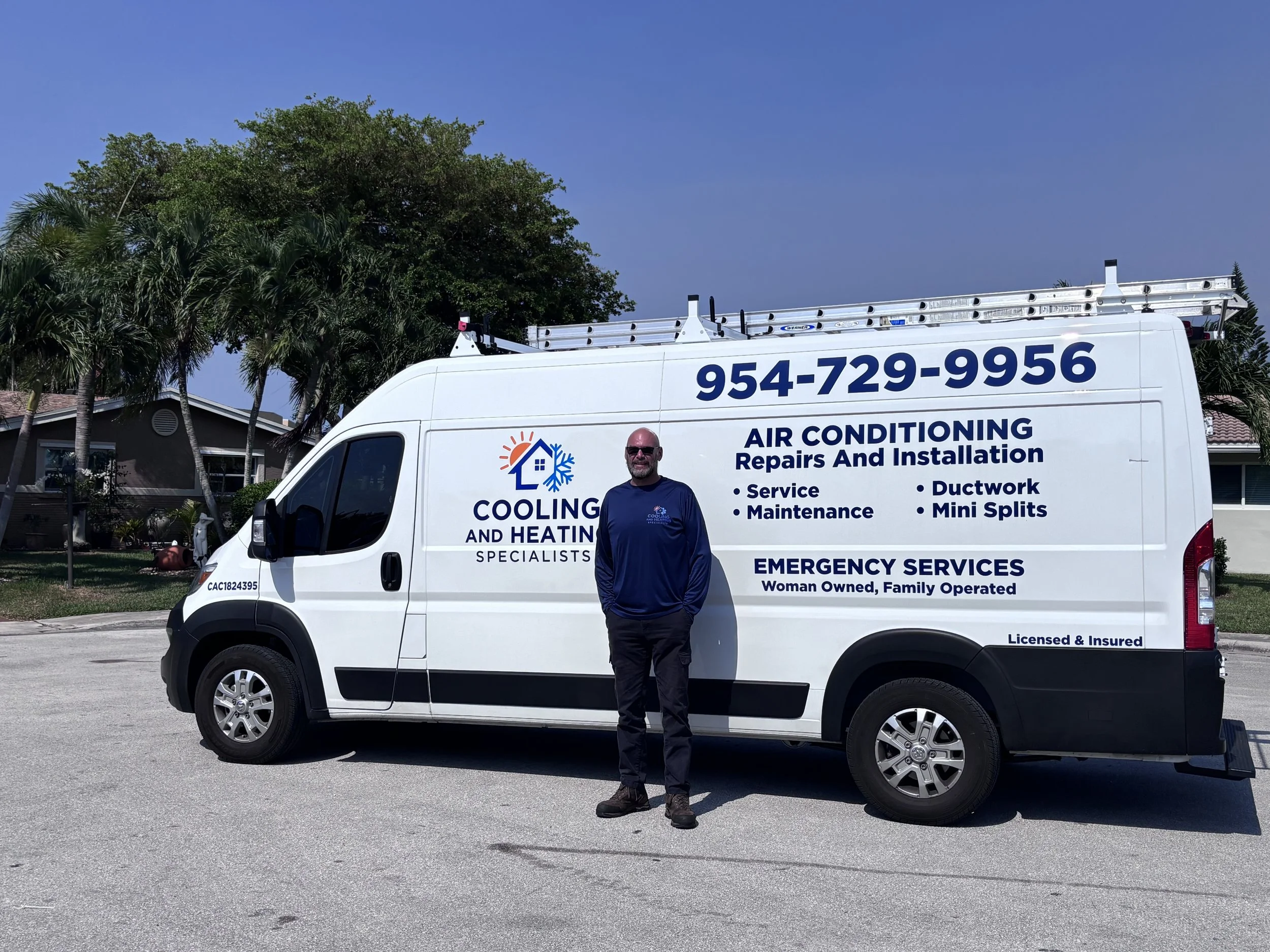
Know who you are hiring
Know Who You're Hiring: Why a Licensed HVAC Contractor Matters
When your air conditioning stops working in South Florida, it's tempting to call the first number you find or hire whoever can show up fastest. But before you let anyone into your home to work on your AC system, there's one question you should always ask: are they actually licensed?
At Cooling and Heating Specialists, we believe every homeowner deserves to know exactly who they're trusting with one of the biggest investments in their home. Here's why that license matters more than most people realize.
What Licensing Actually Means
A licensed HVAC contractor has done more than just pick up a wrench and call themselves a technician. In Florida, becoming licensed requires passing state exams that test real technical knowledge — refrigeration, electrical systems, safety codes, and installation standards. It also typically requires documented field experience before that license is ever issued.
That license is proof of competency, not just a piece of paper. It tells you the person working on your system actually knows what they're doing.
The Risks of Going Unlicensed
Hiring an unlicensed contractor, or a "handyman" offering AC work on the side, might seem like a way to save money upfront. But it often ends up costing homeowners far more in the long run.
No insurance protection. If something goes wrong during the job — a fire, a flood, an injury — you could be personally liable.
No permits pulled. Many HVAC jobs legally require permits and inspections. Skipping this step can lead to code violations, fines, or trouble when you go to sell your home.
No accountability. Licensed contractors answer to a state licensing board. If a job is done poorly, you have real recourse. With an unlicensed contractor, you're often on your own.
Voided warranties. Many manufacturers require installation by a licensed professional for the warranty to remain valid. Unlicensed work can quietly void the protection you thought you had.
How to Verify a Contractor's License
Before hiring anyone for HVAC work, take a few minutes to protect yourself:
Ask for their license number directly.
Verify it through the Florida Department of Business and Professional Regulation (DBPR) website.
Confirm they carry current liability insurance.
Ask whether permits will be pulled for the job, if required.
A legitimate, professional contractor will never hesitate to provide this information. If someone is reluctant to share their license number, that's a red flag worth paying attention to.
Why It Matters for Your Home
Your AC system isn't just about comfort — in South Florida, it's essential to your home's livability for most of the year. The person you hire to install, repair, or maintain that system has direct access to your electrical systems, your ductwork, and your home's safety. That's not a job for guesswork.
At Cooling and Heating Specialists, we are fully licensed and insured, and we're proud of it. We believe transparency builds trust, and trust is what keeps homeowners coming back to us year after year.
The Bottom Line
Before you hire anyone to touch your AC system, ask the question: are they licensed and qualified? It takes two minutes to verify, and it can save you thousands of dollars and countless headaches down the road.
Ready to work with a team you can trust? Contact Cooling and Heating Specialists today to schedule your service and experience the difference that real credentials make.

THe “Rented License Scam”
The "Rented License" Scam: What Every Florida Homeowner Should Know
When you hire a contractor, seeing a license number probably makes you feel confident. It should mean the work is being done by a trained, accountable professional. But there's a practice happening across Florida's construction and HVAC industry that quietly undermines that trust: license renting.
It's illegal, it's more common than most homeowners realize, and it can leave you with no real protection if something goes wrong in your home.
What Is License Renting?
In Florida, contractor licenses are issued to individuals, not companies. That means before a business — a corporation, LLC, or partnership — can legally perform construction or HVAC work, it must have a licensed individual attached to it as its "qualifying agent." This person is legally responsible for supervising, directing, and managing the contracting activities of that business.
License renting happens when a company that isn't actually run by a licensed contractor pays a licensed individual a fee just to attach their name and license number to the business. In exchange for that payment, the license holder allows the company to operate under their credentials, pull permits, and appear fully licensed to customers, without ever actually overseeing the work being performed.
In plain terms: the name on the license and the person actually doing the work in your home are two completely different people, and the license holder may never even know what jobs are being done under their name.
Why It's Illegal
Florida law is specific about what a qualifying agent must actually do. The license holder is required to have genuine, hands-on involvement in the business, typically as a W-2 employee with real responsibility for supervising construction operations. If the license holder is instead being paid as a 1099 independent contractor simply to lend their name, without any actual supervision, that arrangement is classified as illegal license renting.
The reasoning behind this law is straightforward. The entire licensing system exists to ensure that a qualified, trained professional is actually accountable for the safety and quality of the work being done. A license that isn't backed by real oversight defeats the purpose of licensing altogether, and puts homeowners at risk without them ever knowing it.
Why This Matters to You
Most homeowners assume that if a company shows them a license number, that's the end of the due diligence needed. But a rented license means:
The people actually working in your home may have no verified training or supervision at all.
If something goes wrong, such as a fire, an electrical issue, or a failed system, you may not have the accountability you think you have.
Permits may be pulled under a license holder who has no real knowledge of the job, which can create serious complications with inspections, code compliance, or insurance claims.
Warranties tied to licensed installation may not actually be valid, since the work wasn't genuinely overseen by the license holder.
In short, a rented license creates the appearance of legitimacy without the substance behind it. That gap is exactly where homeowners get hurt.
How to Protect Yourself
You don't need to be an expert to avoid this problem. A few simple questions can go a long way:
Ask for the license number and verify it through the Florida Department of Business and Professional Regulation (DBPR) website.
Ask who the qualifying agent is and whether that person is actively involved in overseeing the company's work.
Ask if the qualifying agent will be present or supervising your specific job, especially for larger installations.
Be cautious of unusually low prices from companies that seem eager to avoid detailed questions about licensing.
Trust your instincts. A legitimate company will never hesitate to explain their licensing structure.
The Bottom Line
A license number alone doesn't guarantee real accountability. Understanding how licensing actually works, and knowing that practices like license renting exist, empowers you to ask better questions before letting anyone into your home.
At Cooling and Heating Specialists, our license holder is genuinely involved in overseeing the work we do. We believe transparency isn't optional, it's the foundation of trust between us and every homeowner we serve.
Have questions about our licensing or want to schedule service? Contact Cooling and Heating Specialists today. We're happy to answer every question you have.
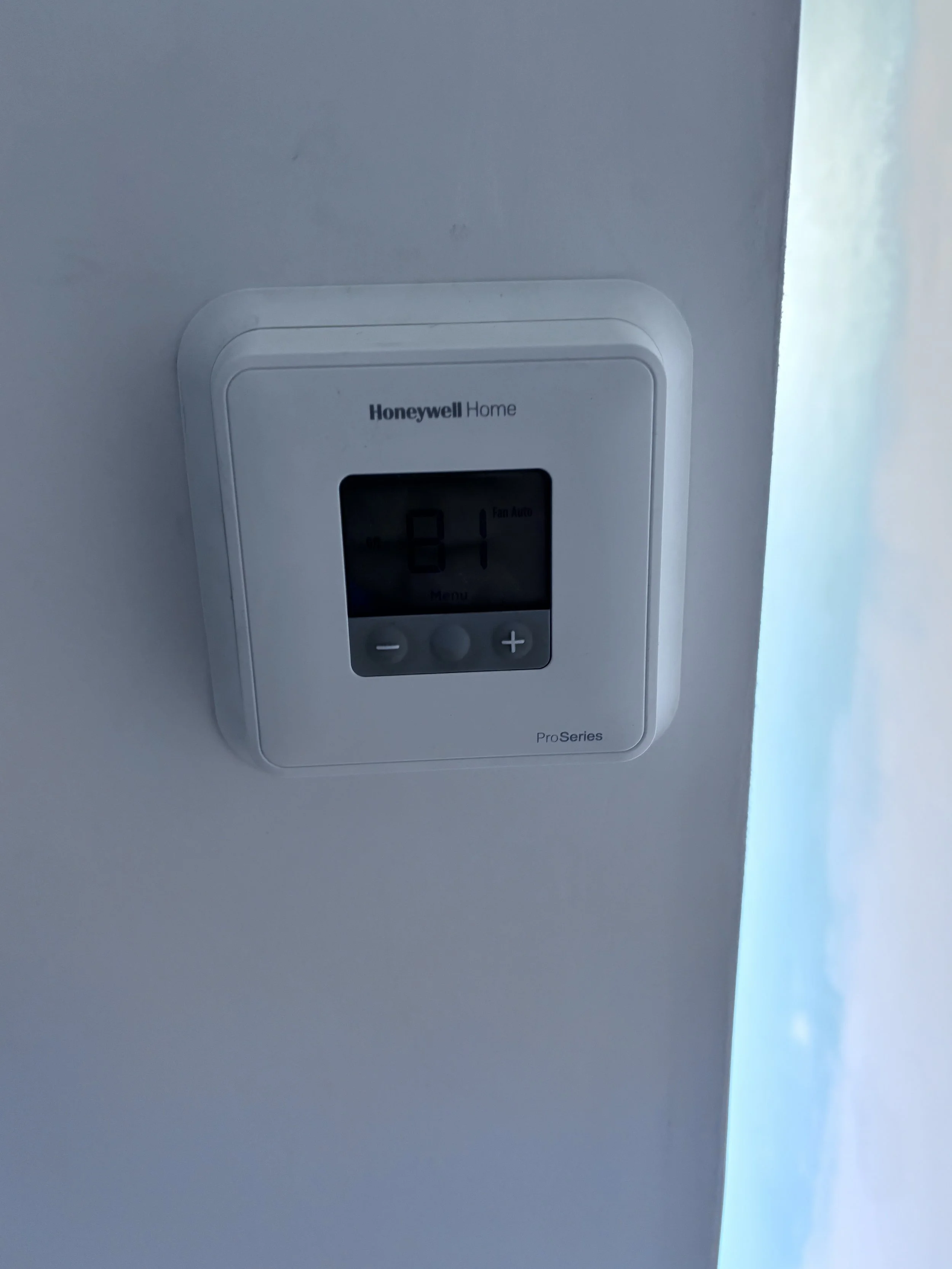
Why Humidity Matters More Than Temperature for Your Florida Home
Why Humidity Matters More Than Temperature for Your Florida Home
You set the thermostat to 75. You check it later and it says 75. So why does your home still feel sticky, warm, and uncomfortable?
In Florida, the number on your thermostat only tells part of the story. Humidity plays just as big a role in comfort as temperature does, and if your AC system isn't managing moisture properly, you can hit your target temperature and still feel far from comfortable.
Your AC Has Two Jobs, Not One
Most homeowners think of their air conditioner as a temperature machine. In reality, it is doing two things at once every time it runs. It lowers the temperature of the air, and it pulls moisture out of that air as it passes over the evaporator coil.
When both of those processes are working correctly, your home feels crisp and comfortable. When humidity removal falls behind, even a home that has technically reached its target temperature can feel muggy, heavy, and uncomfortable to be in.
What a Comfortable Humidity Level Looks Like
For most homes in Florida, indoor humidity between 45 and 55 percent feels comfortable. Once humidity climbs above that range, your body has a harder time cooling itself naturally, which is why a 75 degree room with high humidity can feel warmer than a 78 degree room with humidity properly controlled.
Some common signs that humidity, not temperature, is the real issue include a home that feels sticky or damp despite the AC running, condensation forming on windows or around ductwork, a musty smell in certain rooms, and long AC run times that never quite seem to make the home feel comfortable.
Why Oversized Systems Make This Worse
One of the more surprising causes of poor humidity control is a system that is actually too powerful for the home. An oversized AC unit cools the air quickly and satisfies the thermostat fast, which sounds like a good thing. But dehumidification takes time. If the system shuts off as soon as the temperature target is hit, it hasn't had enough runtime to properly remove moisture from the air.
The result is a home that reads cold on the thermostat but still feels damp and uncomfortable. This is a common issue in homes where the AC system was sized without fully accounting for the home's layout, insulation, and Florida's humid climate.
Getting Both Temperature and Humidity Right
A properly sized and well-maintained system manages temperature and humidity together, not one at the expense of the other. This comes down to correct equipment sizing for your home, clean coils and proper airflow, and a system that runs long enough during each cycle to fully dehumidify the air it processes.
If your home never quite feels comfortable no matter how low you set the thermostat, the fix might not be a colder temperature setting at all. It might be a closer look at how well your system is managing humidity.
Schedule a Humidity Check
Our technicians evaluate both temperature performance and humidity control when we inspect your system. If your home has been feeling sticky or uncomfortable despite the AC running constantly, we can help identify what's really going on and get your comfort back on track.
Cooling and Heating Specialists Serving Broward County
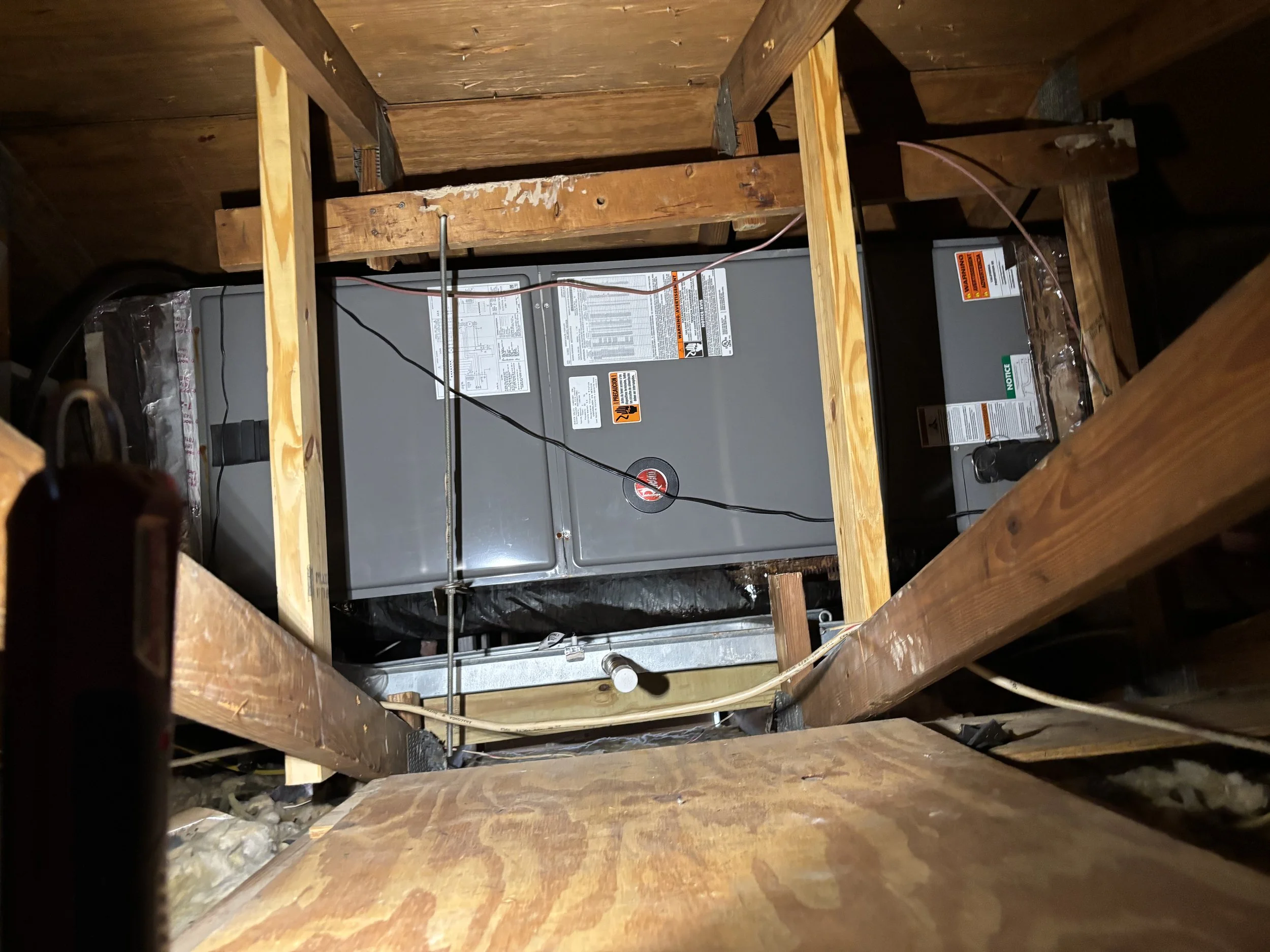
Why Your Attic AC Unit Might Be Working Against You
Why Your Attic AC Unit Might Be Working Against You
If your air conditioner runs constantly but your home still feels warm, the problem might not be your thermostat, your ductwork, or even your unit's age. It could be your attic.
Attics in South Florida regularly reach temperatures well above 120 degrees during the summer months. When your AC unit is installed in the attic, even small gaps around the housing or duct connections can let that superheated air get pulled directly into your system. Instead of conditioning the air from inside your home, your unit ends up fighting a losing battle against attic heat before it ever reaches your living space.
How This Happens
Over time, the seals around an attic AC unit and its connecting ductwork can shrink, crack, or separate. This happens naturally as materials age and expand and contract through repeated heating and cooling cycles. Once a seal breaks, your system develops what technicians call return air leakage, where hot, unconditioned attic air gets drawn into the return side of your unit.
The result is a system that runs longer, works harder, and delivers less comfort. Homeowners often notice higher energy bills, uneven temperatures between rooms, and an AC that seems to run nonstop without ever quite catching up.
Why Resealing Matters
Resealing the unit and its ductwork connections closes off that path for warm air to sneak in. Once the seal is restored, your system only pulls in the air it is actually designed to condition, which means it can reach your target temperature faster and hold it more consistently. This single fix often makes a noticeable difference in both comfort and monthly energy costs.
Checking Fan Speed While We're In There
A resealing visit is also a good opportunity to check the fan speed on your unit. This step matters more than most homeowners realize.
If the fan runs too slow, it will not move enough air through your home, and rooms farther from the unit may never fully cool down. If it runs too fast, the system can struggle to properly dehumidify the air, and the added strain can wear down components faster than they should, shortening the lifespan of your unit.
Getting fan speed dialed in correctly for your specific system and home layout helps everything work the way it was designed to, from airflow balance to energy efficiency to long-term equipment health.
Signs It Might Be Time for a Check
Your AC runs almost continuously but the house never feels fully cool
Energy bills have crept up without an obvious cause
Some rooms are noticeably warmer than others
Your system is several years old and has not had a recent inspection
If any of this sounds familiar, an attic unit inspection is worth scheduling. It is a relatively simple fix that can restore both comfort and efficiency.
Schedule Your Inspection
Our technicians are experienced with attic-installed systems throughout Broward County and know exactly what to look for. We will inspect your seals, address any warm air infiltration, and confirm your fan speed is set correctly for your home. Give us a call and let's get your system working the way it should.
Cooling and Heating Specialists Serving Broward County
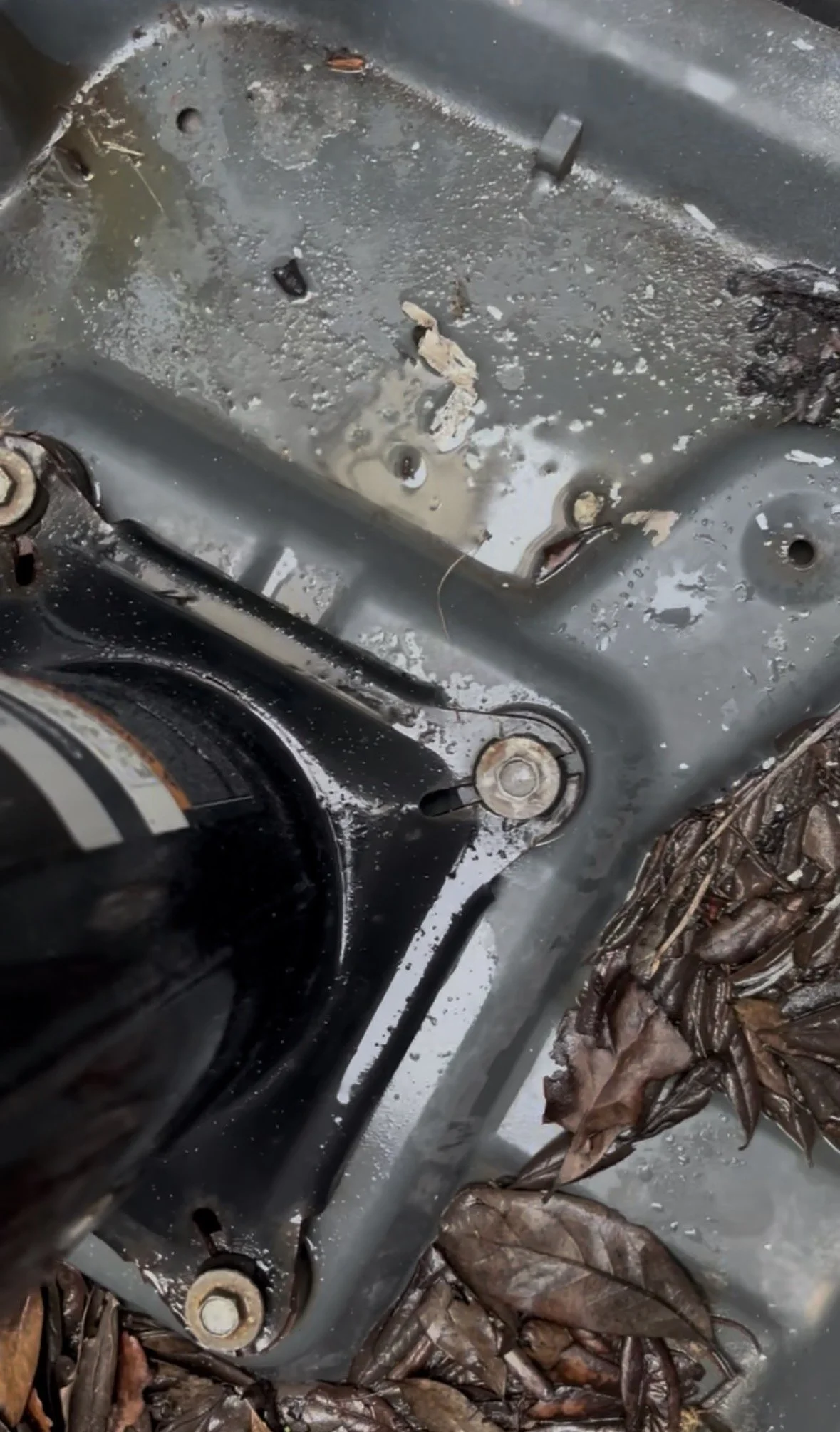
is Your AC Coil Leaking Refrigerant?
Is Your AC Coil Leaking Refrigerant? Here's What That Really Means
If your air conditioner has been running constantly but your home still isn't cooling down, a refrigerant leak in the evaporator coil could be the reason. It's one of the more common issues we see on service calls, and it's also one of the most misunderstood. Here's what's actually happening inside your system, what your options are, and how to avoid the same problem down the road.
What Is the Evaporator Coil, and Why Does It Leak?
The evaporator coil sits inside your air handler and is responsible for absorbing heat from the air in your home. It's made of thin metal tubing that carries refrigerant through the system. Over years of use, that tubing can corrode from the inside out or develop small pinhole leaks, especially in Florida's humid climate, which is tough on HVAC components.
Once a coil starts leaking, refrigerant slowly escapes the system. As levels drop, your air conditioner has to work harder to cool your home, energy bills climb, and comfort suffers.
Why You Can't Just "Top Off" the Refrigerant
This is a common misconception, and an important one to clear up. Under EPA regulations, it is illegal to add refrigerant to a system with a known leak unless the leak has been properly repaired first. Topping off refrigerant on a leaking coil isn't a fix. It's not even a legal option. The refrigerant will simply leak back out, often within weeks or months, and the underlying problem never actually goes away.
The right approach is to locate the source of the leak, repair or replace the affected component, and only then recharge the system with refrigerant.
What Happens Next: Repair or Replace?
Once a coil leak is confirmed, the first thing we do is check the equipment's warranty status. Many evaporator coils carry a manufacturer warranty of 10 years or more on parts.
If the coil is still under warranty: The replacement part may be covered at no cost, with the homeowner typically responsible for labor.
If the coil is out of warranty: Depending on the age and condition of the system, replacing the coil is usually the most reliable path forward. Coils that have reached the end of their useful life are more prone to develop additional leaks even after a repair, so a full coil replacement often makes more sense than a patch job, both for reliability and for your wallet in the long run.
Either way, we always walk homeowners through the options and the honest reasoning behind our recommendation before any work begins.
What Could Have Prevented This?
Coil failures don't usually happen overnight. They're often the result of years of wear that could have been caught earlier. A few things go a long way in preventing this kind of repair:
Annual coil cleaning. Dirt, debris, and biological growth on the coil can accelerate corrosion over time.
Routine refrigerant level checks. Catching a slow leak early can mean a small repair instead of a full coil replacement.
Keeping the outdoor unit clear. Debris and buildup around your condenser add strain to the whole system.
Staying current on seasonal tune-ups. Regular maintenance catches small issues before they turn into bigger, more expensive ones.
A maintenance plan is one of the simplest ways to protect your system and your budget. It's a lot easier to catch a small leak during a routine check than to discover one when your AC has already stopped keeping up on a 95 degree day.
Think You Might Have a Refrigerant Leak?
If your system is running constantly, blowing warm air, or just isn't keeping your home comfortable the way it used to, don't wait for it to get worse. We'll come out, diagnose the issue honestly, check your warranty status, and walk you through exactly what needs to happen and why.
Cooling and Heating Specialists LLC is a woman-owned, family-operated HVAC company proudly serving all of Broward County and Palm Beach County from Lantana south through Boca Raton.
📞 954-729-9956 🌐 CoolingHeatingSpecialists.com ✉️ CHS.HVACPros@gmail.com
Licensed & Insured | CAC1824395 | EPA 608 Certified
Why Do AC Coils Go Bad?
Why Do AC Coils Go Bad? A Real Broward County Repair Story
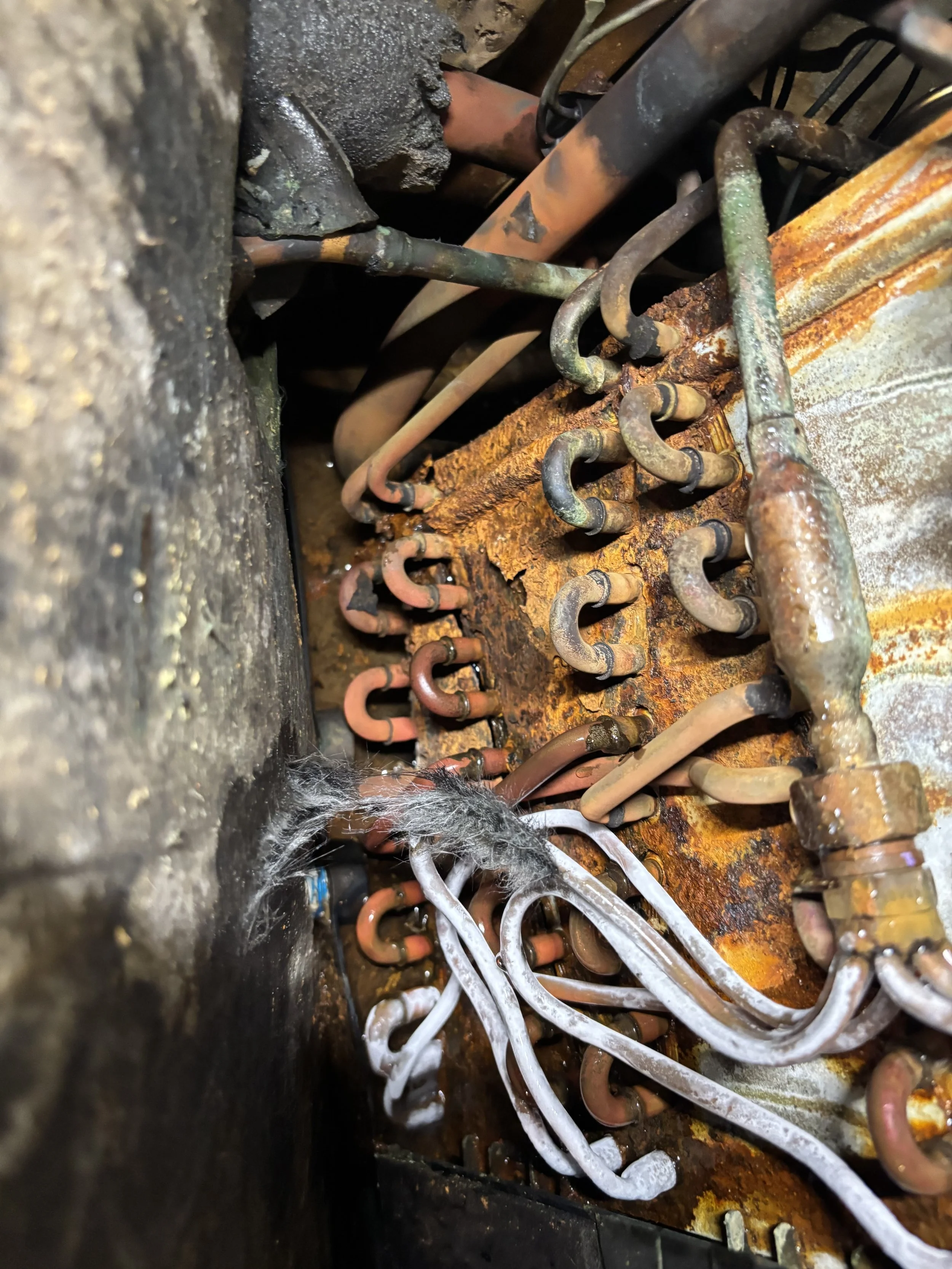
When we opened up a customer's AC system recently, we found something that stops most homeowners in their tracks: a cracked coil pan that had damaged the coil box beyond repair. A cracked pan like this usually means a full box replacement, and that's not a small job or a small bill.
But there was good news. The coil itself was still under manufacturer warranty. That one detail meant we could replace the damaged components without charging the homeowner for parts that were still covered. It's a good reminder of why we always check warranty status first, before we ever write up a quote.
What Happened
During a routine inspection, we found the coil pan had cracked, which had compromised the surrounding box. Left alone, this kind of damage leads to water leaks, reduced efficiency, and eventually a bigger, more expensive failure. The pan and box needed to come out and be replaced.
Because the coil unit was still within its warranty window, we were able to source the replacement parts at a fraction of the normal cost and pass those savings directly to the homeowner. Same repair, same result, but a much smaller bill.
Why Do AC Coils Go Bad?
Coil problems don't usually happen overnight. Here are the most common reasons we see coils and their surrounding components fail here in South Florida:
Corrosion
Florida's humidity and salt air are tough on metal. Over years of exposure, coils and pans can corrode, weaken, and eventually crack, especially in coastal areas like Broward and Palm Beach County.
Refrigerant leaks
Small, slow leaks in the coil can go unnoticed for a long time. They quietly reduce your system's efficiency while also eating away at the coil itself.
Dirt and debris buildup
When a coil is coated in dirt, dust, or grime, it has to work much harder to do its job. That extra strain shortens its lifespan.
Age
Most coils start to break down somewhere between 10 and 15 years, even in systems that have been well cared for. It's simply a matter of time and wear.
Skipped maintenance
Small issues, like a minor drainage problem or an early crack, are easy and inexpensive to catch during a routine tune-up. Left unchecked, they turn into bigger and costlier repairs down the road.
The Takeaway
Regular maintenance is the best way to catch coil issues while they're still small. And when a repair is unavoidable, it always pays to check whether parts are still under warranty before assuming the worst about the cost.
If your system is acting up or it's been a while since your last tune-up, we're happy to take a look.
Ready to Schedule Service?
Call us at 954-729-9956 or email CHS.HVACPros@gmail.com to schedule an inspection or repair. We serve all of Broward County and Palm Beach County from Lantana south through Boca Raton.
Licensed & Insured | CAC1824395
What Is EPA 608 Certification, and Why It Matters When Hiring an AC Technician
What Is EPA 608 Certification, and Why It Matters When Hiring an AC Technician
If you've ever looked into hiring an HVAC company, you may have seen the term "EPA 608 Certified" on a website, van, or business card. It's easy to skim past, but it's actually one of the most important credentials a technician can have, especially any time refrigerant is involved.
What EPA 608 Certification Actually Means
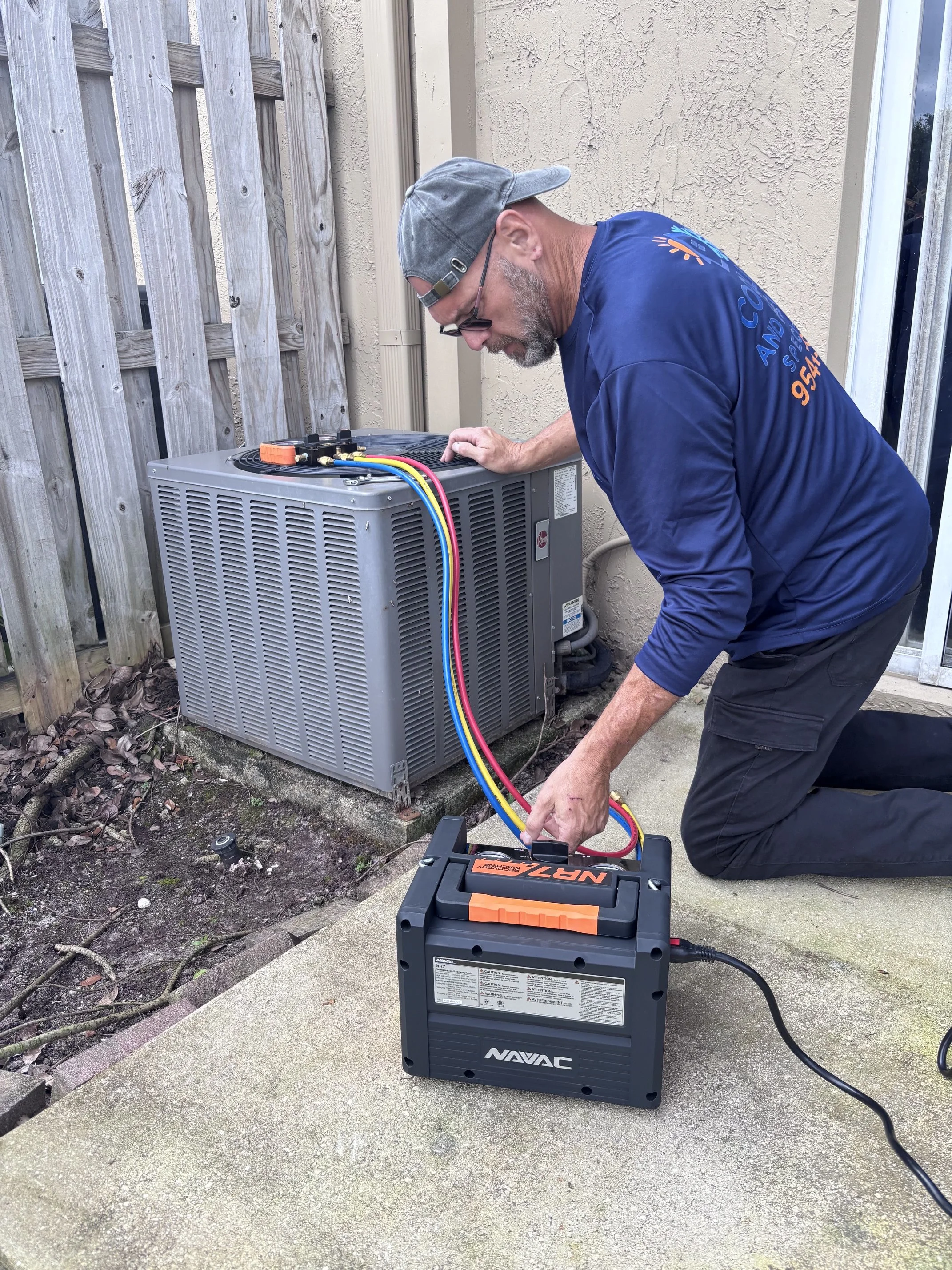
EPA 608 certification is a federal requirement, not a marketing term. It's issued by the Environmental Protection Agency under the Clean Air Act, and it's required for anyone who purchases, handles, recovers, or works with refrigerant in air conditioning and refrigeration systems.
The certification exists because refrigerants can harm the environment if they're released into the air improperly. A technician who's EPA 608 Certified has passed testing on the safe handling, recovery, and disposal of refrigerant, and understands the regulations around it.
Why This Matters for Homeowners
When you hire someone to work on your AC system, especially for repairs, recharges, or replacements involving refrigerant, that person is legally required to hold this certification. Here's why it should matter to you:
It's the law. Handling refrigerant without EPA 608 certification is a federal violation. If a technician isn't certified, they legally shouldn't be touching your refrigerant lines at all.
It protects your system. Improper refrigerant handling can damage compressors, cause leaks, or lead to incorrect refrigerant charges, all of which shorten the life of your system and lead to more repairs down the road.
It protects the environment. Refrigerants released into the atmosphere contribute to environmental harm. Certified technicians follow proper recovery procedures to prevent that.
It's a sign of a legitimate company. A business that invests in proper certification for its technicians is generally more likely to follow best practices across the board, not just with refrigerant.
How to Check
You can ask any HVAC company whether their technicians are EPA 608 Certified before you hire them. A reputable company will have no problem confirming this and should be able to show proof if asked.
Our Commitment
Our technicians are EPA 608 Certified, licensed, and insured. When we handle refrigerant on your system, whether it's a repair, a recharge, or a full replacement, you can count on it being done correctly and in compliance with federal regulations.
Cooling and Heating Specialists LLC Serving Broward County and Palm Beach County 📞 954-729-9956 ✉️ CHS.HVACPros@gmail.com 🌐 CoolingHeatingSpecialists.com
Licensed & Insured | CAC1824395